
Can Your Original Nob Hill Hardwood Floors Be Saved After a Pipe Burst?
Nob Hill’s historic homes feature some of San Francisco’s most treasured original hardwood floors. When a pipe bursts in your Victorian or Edwardian home, the question isn’t just about water removal—it’s about preserving a century-old architectural element that defines your property’s character and value. San Francisco Office of Historic Preservation.
The good news: many original Nob Hill hardwood floors can be restored rather than replaced, but time is critical. Water seeps into the wood’s cellular structure within hours, causing irreversible damage if not addressed immediately. The key is understanding your floor’s specific wood species, age, and construction method before determining the restoration approach. Who to call for emergency water damage repair in San Francisco right now.
Call (415) 449-6555 now for emergency water damage assessment. Our team specializes in Nob Hill’s historic properties and can often save your original floors if we arrive within the first 24-48 hours. Fast water restoration services for SoMa businesses and tech offices.
Understanding Nob Hill’s Historic Hardwood Construction
Nob Hill’s architectural heritage spans from the late 1800s through the mid-20th century, with each era featuring distinct wood flooring characteristics. Most pre-1940s homes used old-growth timber harvested from California’s original forests—wood that’s denser, more stable, and often more valuable than modern lumber.
Common wood species in Nob Hill include old-growth Douglas Fir, quarter-sawn White Oak, and occasionally reclaimed Redwood or Heart Pine. These woods have different moisture tolerances and restoration requirements than contemporary flooring materials.. Read more about How to Understand the Moisture Readings in Your Professional Restoration Report.
Old-growth Douglas Fir, prevalent in many Nob Hill Victorians, has a tight grain pattern and natural resistance to moisture compared to modern plantation-grown fir. However, it’s also more prone to checking and splitting when dried too quickly after water exposure. High-end water damage restoration for historic Pacific Heights estates.
White Oak, often found in Edwardian homes and later construction, offers superior dimensional stability and can typically withstand more aggressive drying techniques without warping or cupping.
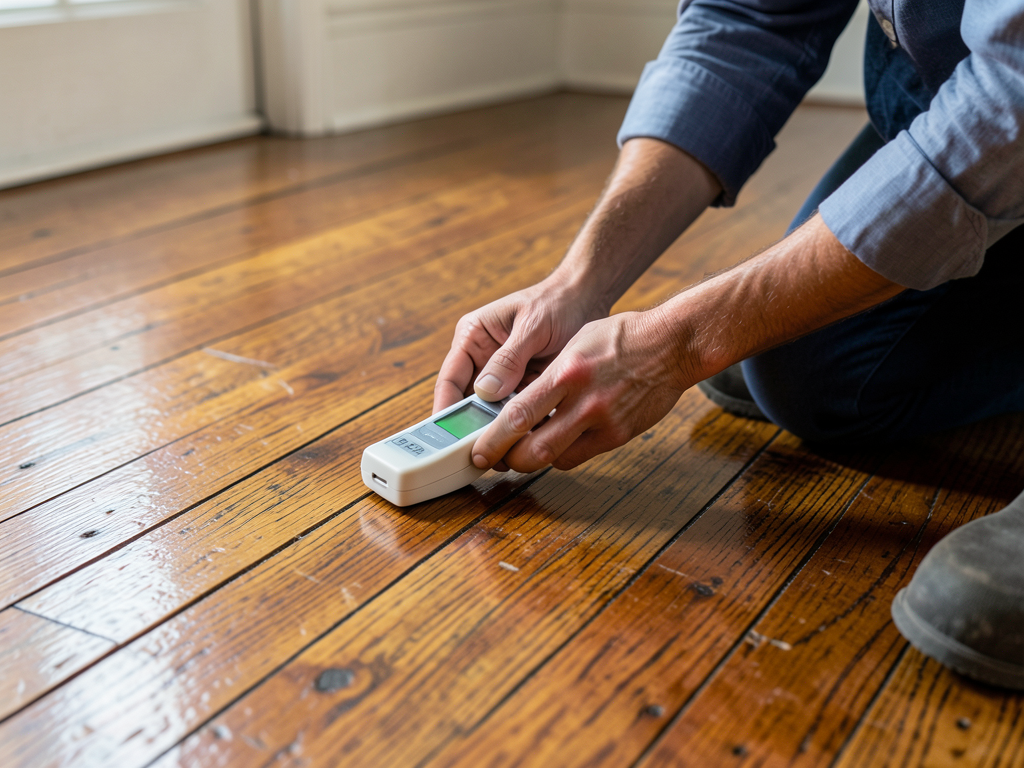
A technician using a non-invasive moisture meter to assess water penetration depth in a 1920s Nob Hill hardwood floor, showing the diagnostic process for historic wood restoration.
Water Damage Assessment: The Critical First Step
Before any restoration work begins, we conduct a comprehensive moisture mapping of your affected floors. This diagnostic process determines water migration patterns, identifies hidden moisture pockets, and establishes a baseline for the restoration timeline.
Our moisture assessment follows IICRC S500 standards for water damage restoration, using multiple testing methods to avoid damaging your historic floors. We measure moisture content at various depths—surface, core, and subfloor—to understand the full extent of water infiltration. IICRC S500 water damage restoration standards.
Surface moisture readings alone can be misleading with historic wood. A floor might appear dry on the surface while retaining significant moisture in the core, which will continue to cause damage as it slowly migrates outward.
We also evaluate the floor’s construction method. Nob Hill homes often feature plank-on-plank construction over wood subfloors, or in some cases, original hardwood installed directly over joists without subflooring. This construction affects how water moves through the floor system and influences our restoration strategy.
Category of water contamination is another critical factor. Clean water from a supply line break has different restoration requirements than contaminated water from a sewage backup or roof leak carrying decades of accumulated debris through your ceiling. Professional sewage cleanup and sanitization for Mission District basements.
According to San Francisco Building Code Section 1203.4, any water-damaged materials must be properly dried or removed to prevent mold growth, with specific requirements for historic structures in designated preservation districts.. Read more about The Real Dangers of Waiting Too Long to Dry Out Your San Francisco Property.
The Restoration Process: Saving vs. Replacing
Historic hardwood restoration follows a different philosophy than standard floor refinishing. Our goal is preservation first, replacement only when absolutely necessary. This approach often saves homeowners thousands while maintaining their home’s historic integrity.. Read more about Why Many San Francisco Homeowners Are Switching to Waterproof Flooring After a Flood.
Step 1: Emergency Water Extraction and Containment
We use specialized extraction equipment designed for hardwood surfaces, avoiding aggressive techniques that could damage century-old wood. The extraction process is followed by containment setup to prevent moisture migration to unaffected areas.
Step 2: Controlled Drying Environment
Rather than using standard industrial dehumidifiers, we create a controlled drying chamber specific to your floor’s wood species and construction. This might involve desiccant dehumidification, heat drying, or a combination approach depending on the wood’s characteristics.
Step 3: Moisture Monitoring and Documentation
We track moisture content daily using electronic moisture meters and manual testing. This documentation serves two purposes: ensuring proper drying and providing insurance companies with the technical data needed for coverage approval.
Step 4: Structural Assessment
Once the floor reaches equilibrium moisture content (typically 6-9% for San Francisco’s climate), we assess structural integrity. This includes checking for loose boards, subfloor damage, and any warping that might require targeted repairs.
Step 5: Restoration and Refinishing
Historic floor restoration often involves hand-sanding techniques, period-appropriate stains, and traditional finishing methods. We match existing patina and wear patterns to ensure repairs blend seamlessly with original surfaces.
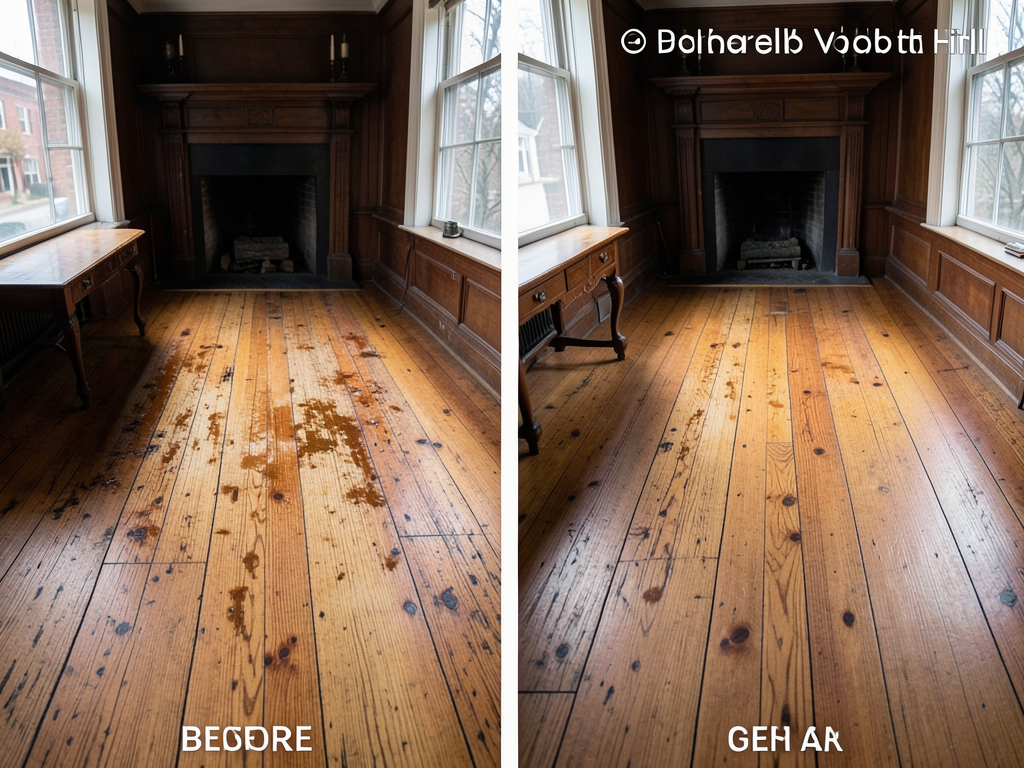
Before and after restoration of a 1910s Douglas Fir floor in a Nob Hill Victorian, showing water stain removal and matching of original finish characteristics.
Common Water Damage Scenarios in Nob Hill Homes
Pipe bursts represent just one of several water damage scenarios affecting Nob Hill’s historic floors. Understanding your specific situation helps determine the best restoration approach.
Supply Line Failures: The most common cause of sudden water damage, often occurring in walls or ceilings above hardwood floors. These typically involve clean water but can release large volumes quickly.
Roof Leaks: Nob Hill’s older homes often have aging roofing systems. Water can travel along joists and rafters before dripping onto floors, creating widespread damage that’s not immediately visible.
Appliance Failures: Washing machine hoses, dishwasher supply lines, and water heaters in Nob Hill’s many in-unit laundry and kitchen configurations can cause significant floor damage if they fail.
Foundation Moisture: San Francisco’s unique soil conditions and the age of Nob Hill’s foundations can lead to gradual moisture migration through basement or crawl space walls, affecting first-floor hardwoods. How to handle basement flooding in San Francisco after a heavy rainstorm.
Atmospheric River Events: San Francisco’s increasing frequency of atmospheric river storms can overwhelm older drainage systems, leading to basement flooding that affects main-floor hardwoods through capillary action.
Each scenario requires a different approach. Clean water damage allows for more aggressive restoration techniques, while contaminated water often necessitates antimicrobial treatment and more conservative drying methods to preserve the wood’s integrity.
Cost Factors and Insurance Considerations
Historic floor restoration costs vary significantly based on several factors. The wood species affects both the restoration complexity and the material costs if replacement becomes necessary.
Old-growth Douglas Fir restoration typically costs 40-60% less than complete replacement, while White Oak restoration might save 30-50% compared to new installation. These savings increase substantially when considering the difficulty of matching period-appropriate materials and finishes.
Insurance coverage for historic floor restoration depends on your policy specifics and the water damage category. Most standard homeowners policies cover sudden, accidental water damage but may exclude gradual damage or require additional endorsements for historic preservation.
We work directly with insurance adjusters, providing detailed documentation of damage extent, restoration plans, and cost estimates. Our documentation includes moisture mapping reports, photographic evidence, and technical specifications that satisfy insurance requirements.
San Francisco’s Office of Historic Preservation may have jurisdiction over restoration work in designated historic districts. We navigate these requirements as part of our service, ensuring compliance while maximizing preservation options.
Prevention Strategies for Nob Hill Homeowners
While you can’t prevent every pipe burst, several strategies can minimize water damage risk to your historic floors.
Regular Plumbing Inspection: Annual inspection of supply lines, especially in walls adjacent to hardwood floors. Look for corrosion, moisture stains, or bulging in walls that might indicate developing leaks.
Water Detection Systems: Modern leak detection systems can alert you to problems before significant damage occurs. Some systems integrate with smart home technology for immediate notification.
Proper Humidity Control: San Francisco’s coastal climate creates unique challenges for historic wood. Maintaining consistent indoor humidity (ideally 35-55%) prevents excessive expansion and contraction that weakens joints over time.
Roof and Gutter Maintenance: Regular inspection and maintenance of roofing systems prevents the slow leaks that often cause the most extensive floor damage over time.
Emergency Shutoff Knowledge: Knowing how to quickly shut off your home’s main water supply can prevent catastrophic damage if a pipe does burst.
Consider this: a small leak that drips for months can cause more damage than a sudden pipe burst that’s caught within hours. Prevention and early detection are your best defenses.
Why Professional Restoration Matters
Historic floor restoration isn’t a DIY project or a standard refinishing job. It requires understanding wood science, historic construction methods, and San Francisco’s unique environmental conditions.
Professional restoration offers several advantages: proper moisture assessment prevents incomplete drying that leads to future problems, specialized equipment minimizes further damage during the restoration process, and expertise in historic materials ensures appropriate techniques are used.
We’ve restored floors in Nob Hill homes dating back to the 1880s, working with wood that’s no longer commercially available. This experience allows us to make informed decisions about when to restore versus replace, always prioritizing preservation when structurally sound.
Our team holds IICRC certifications in water damage restoration and specializes in historic material preservation. We understand the difference between restoring a 100-year-old floor and refinishing a modern installation.
Don’t risk your home’s historic character with inexperienced contractors. Call (415) 449-6555 for expert assessment of your Nob Hill hardwood floors. We’ll provide honest recommendations based on your floor’s specific condition and your preservation goals.
A technician applying period-appropriate tung oil finish to a restored Nob Hill hardwood floor, demonstrating the specialized techniques required for historic wood preservation.
Frequently Asked Questions
How long do I have to save my hardwood floors after a pipe burst?
Ideally within 24-48 hours. Water begins causing permanent damage to wood cellular structure within this timeframe. However, we’ve successfully restored floors that were wet for up to 72 hours, though the restoration process becomes more complex and expensive.
Can I just let my floors dry naturally?
No. Natural drying often leads to uneven moisture content, warping, and mold growth. Professional restoration uses controlled drying techniques that prevent these issues while ensuring complete moisture removal from the wood’s core.
Will insurance cover historic floor restoration?
Most standard policies cover sudden, accidental water damage. Coverage for historic preservation varies by policy. We provide detailed documentation that helps insurance adjusters understand the value of restoration versus replacement.
How can I tell if my floors are too damaged to save?
Signs of severe damage include extensive warping, delamination of boards, persistent mold growth, or structural weakness in the subfloor. However, many floors that appear severely damaged can be restored with proper techniques.
What makes Nob Hill floors different from other areas?
Nob Hill homes often feature older construction methods, historic wood species no longer commercially available, and unique architectural details that require specialized restoration knowledge. The area’s coastal climate also creates specific moisture challenges.
Take Action Now
Water damage to historic hardwood floors requires immediate professional attention. The longer you wait, the more likely your floors will need complete replacement rather than restoration.
Call (415) 449-6555 today to schedule your emergency assessment. Our team will arrive within 60 minutes to evaluate your floors and begin the restoration process if possible. Don’t let a burst pipe destroy your home’s historic character—professional help is just one call away.
Pick up the phone and call (415) 449-6555 before the next storm hits or the next pipe fails. Your Nob Hill home deserves expert care that preserves its architectural heritage while addressing modern water damage challenges.
You may also find this helpful. What Happens When Your Lower Haight Radiant Floor Heating Starts to Leak?.
{
“@context”: “https://schema.org”,
“@type”: “BlogPosting”,
“headline”: “Can Your Original Nob Hill Hardwood Floors Be Saved After a Pipe Burst?”,
“description”: “Expert water damage restoration for Nob Hill’s historic hardwood floors. Learn if your original wood can be saved after a pipe burst in San Francisco’s iconic neighborhood.”,
“wordCount”: 1947,
“datePublished”: “2026-03-12T13:50:00.000Z”,
“dateModified”: “2026-03-12T13:50:00.000Z”,
“inLanguage”: “en-US”,
“mainEntityOfPage”: {
“@type”: “WebPage”,
“@id”: “https://summitwaterdamagerestorationsanfrancisco.com”
},
“publisher”: {
“@type”: “LocalBusiness”,
“name”: “Summit Water Damage Restoration San Francisco”,
“url”: “https://summitwaterdamagerestorationsanfrancisco.com”
},
“author”: {
“@type”: “Organization”,
“name”: “Summit Water Damage Restoration San Francisco”,
“url”: “https://summitwaterdamagerestorationsanfrancisco.com”
},
“image”: {
“@type”: “ImageObject”,
“url”: “https://summitwaterdamagerestorationsanfrancisco.com/wp-content/uploads/2026/03/can-your-original-nob-hill-hardwood-floors-be-save-1.png”
}
}
{
“@context”: “https://schema.org”,
“@type”: “LocalBusiness”,
“name”: “Summit Water Damage Restoration San Francisco”,
“url”: “https://summitwaterdamagerestorationsanfrancisco.com”,
“address”: {
“@type”: “PostalAddress”,
“addressLocality”: “San Francisco”
},
“areaServed”: {
“@type”: “City”,
“name”: “San Francisco”
}
}
{
“@context”: “https://schema.org”,
“@type”: “FAQPage”,
“mainEntity”: [
{
“@type”: “Question”,
“name”: “How long do I have to save my hardwood floors after a pipe burst?”,
“acceptedAnswer”: {
“@type”: “Answer”,
“text”: “Ideally within 24-48 hours. Water begins causing permanent damage to wood cellular structure within this timeframe. However, we’ve successfully restored floors that were wet for up to 72 hours, though the restoration process becomes more complex and expensive.”
}
},
{
“@type”: “Question”,
“name”: “Can I just let my floors dry naturally?”,
“acceptedAnswer”: {
“@type”: “Answer”,
“text”: “No. Natural drying often leads to uneven moisture content, warping, and mold growth. Professional restoration uses controlled drying techniques that prevent these issues while ensuring complete moisture removal from the wood’s core.”
}
},
{
“@type”: “Question”,
“name”: “Will insurance cover historic floor restoration?”,
“acceptedAnswer”: {
“@type”: “Answer”,
“text”: “Most standard policies cover sudden, accidental water damage. Coverage for historic preservation varies by policy. We provide detailed documentation that helps insurance adjusters understand the value of restoration versus replacement.”
}
},
{
“@type”: “Question”,
“name”: “How can I tell if my floors are too damaged to save?”,
“acceptedAnswer”: {
“@type”: “Answer”,
“text”: “Signs of severe damage include extensive warping, delamination of boards, persistent mold growth, or structural weakness in the subfloor. However, many floors that appear severely damaged can be restored with proper techniques.”
}
},
{
“@type”: “Question”,
“name”: “What makes Nob Hill floors different from other areas?”,
“acceptedAnswer”: {
“@type”: “Answer”,
“text”: “Nob Hill homes often feature older construction methods, historic wood species no longer commercially available, and unique architectural details that require specialized restoration knowledge. The area’s coastal climate also creates specific moisture challenges.”
}
}
]
}
{
“@context”: “https://schema.org”,
“@type”: “BreadcrumbList”,
“itemListElement”: [
{
“@type”: “ListItem”,
“position”: 1,
“name”: “Home”,
“item”: “https://summitwaterdamagerestorationsanfrancisco.com”
},
{
“@type”: “ListItem”,
“position”: 2,
“name”: “Blog”,
“item”: “https://summitwaterdamagerestorationsanfrancisco.com/blog”
},
{
“@type”: “ListItem”,
“position”: 3,
“name”: “Can Your Original Nob Hill Hardwood Floors Be Saved After a Pipe Burst?”
}
]
}
{
“@context”: “https://schema.org”,
“@type”: “Service”,
“serviceType”: “Water Damage Restoration”,
“provider”: {
“@type”: “LocalBusiness”,
“name”: “Summit Water Damage Restoration San Francisco”,
“url”: “https://summitwaterdamagerestorationsanfrancisco.com”
},
“areaServed”: {
“@type”: “City”,
“name”: “San Francisco”
},
“description”: “Expert water damage restoration for Nob Hill’s historic hardwood floors. Learn if your original wood can be saved after a pipe burst in San Francisco’s iconic neighborhood.”
}