menu

Hidden Moisture Detection in San Francisco – Stop Structural Damage Before It Spreads

Advanced thermal imaging and moisture meters find trapped water behind walls, under floors, and in ceilings before mold colonizes or framing rots in San Francisco's fog-prone microclimates.

Slider Image 1
Slider Image 2
Slider Image 3
Slider Image 4
Slider Image 5
Slider Image 7
Slider Image 8
Slider Image 9
Slider Image 10
Slider Image 11

Why Hidden Moisture Is a Silent Threat in San Francisco Homes

You smell something musty in the hallway. The drywall feels slightly cool to the touch. Your hardwood floors are buckling near the bathroom. These are not minor annoyances. They are warnings that water is migrating where you cannot see it.

San Francisco's coastal fog and marine layer create persistent humidity that accelerates concealed dampness problems. When a pipe leaks inside a wall cavity or a roof flashing fails during winter storms, that water does not evaporate quickly in our cool, damp climate. It sits. It spreads through insulation, soaks into studs, and saturates subfloors. Within 48 hours, mold spores begin to colonize. Within weeks, structural wood begins to decay.

The real danger is not the water you see on the surface. It is the trapped water behind finishes. A slow drip from a second-story shower pan can travel down wall studs and pool under the first-floor slab. A pinhole leak in copper supply lines can saturate drywall for months before you notice discoloration. Detecting invisible leaks before they compromise your home's structure requires equipment that sees what your eyes cannot.

Victorian and Edwardian homes in neighborhoods like the Mission, Noe Valley, and the Richmond have plaster walls over wood lath. When water infiltrates these assemblies, it spreads horizontally along the lath strips, damaging large sections of wall before you see a single stain. Identifying unseen water intrusion early prevents catastrophic repair bills and protects your property value in one of the nation's most expensive real estate markets.

Why Hidden Moisture Is a Silent Threat in San Francisco Homes
How We Find Water You Cannot See

How We Find Water You Cannot See

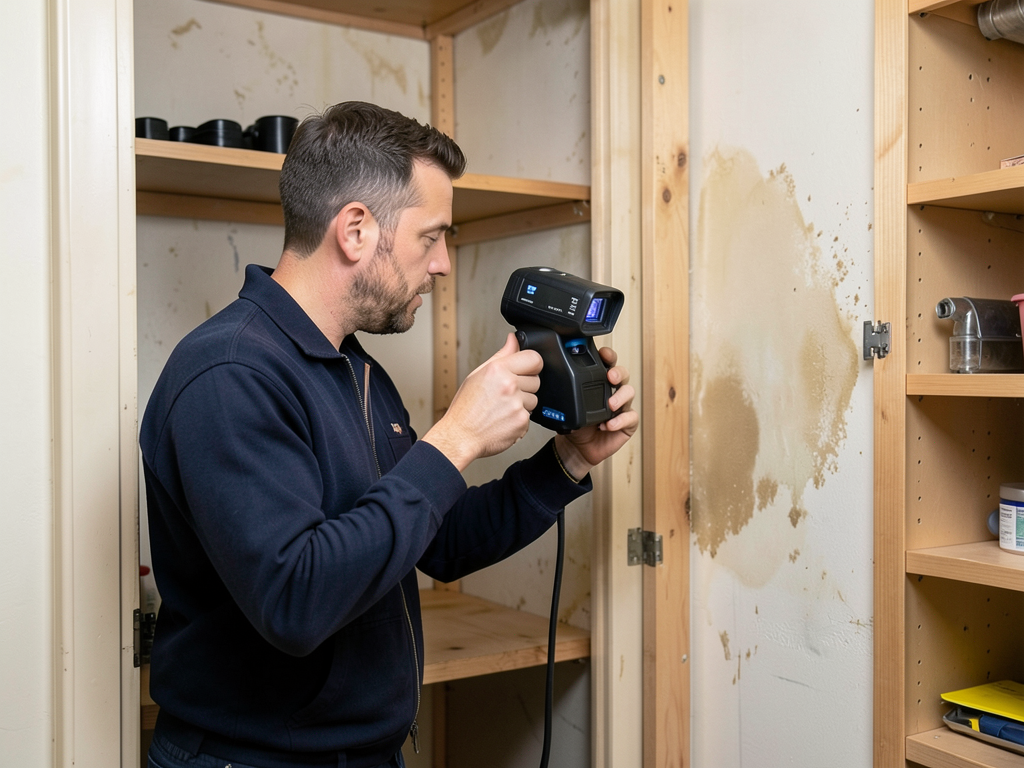
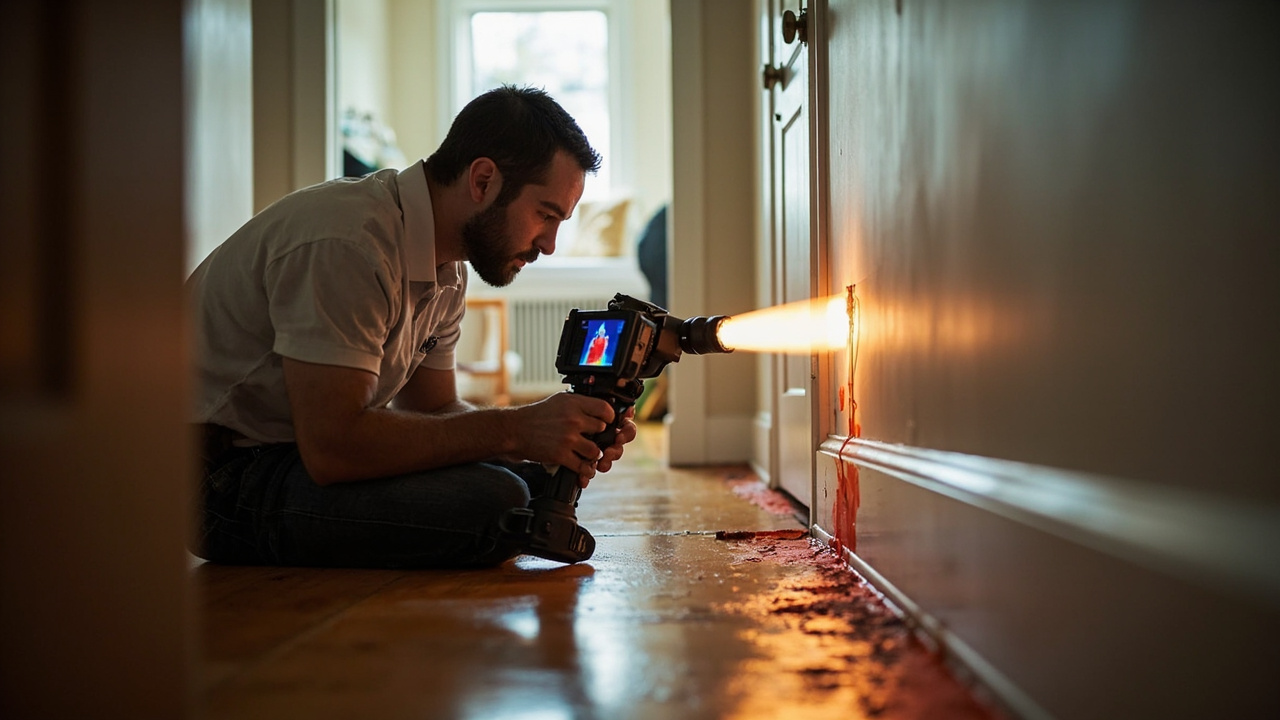
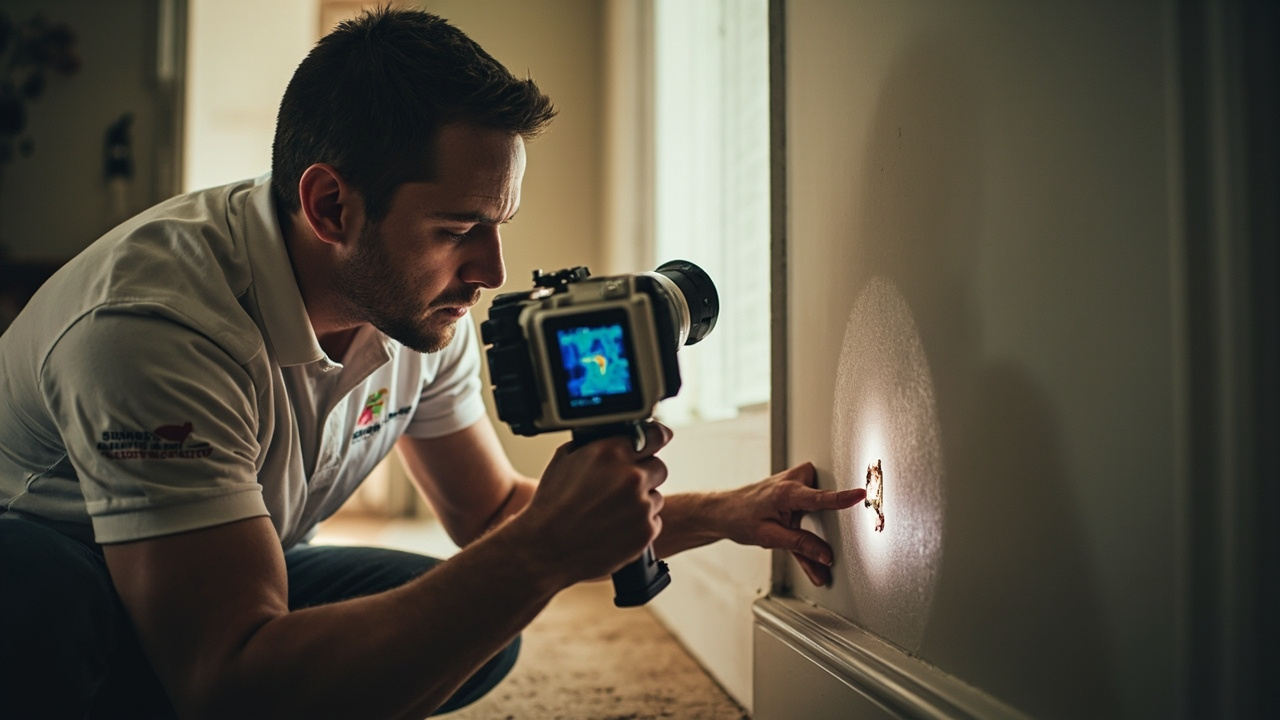
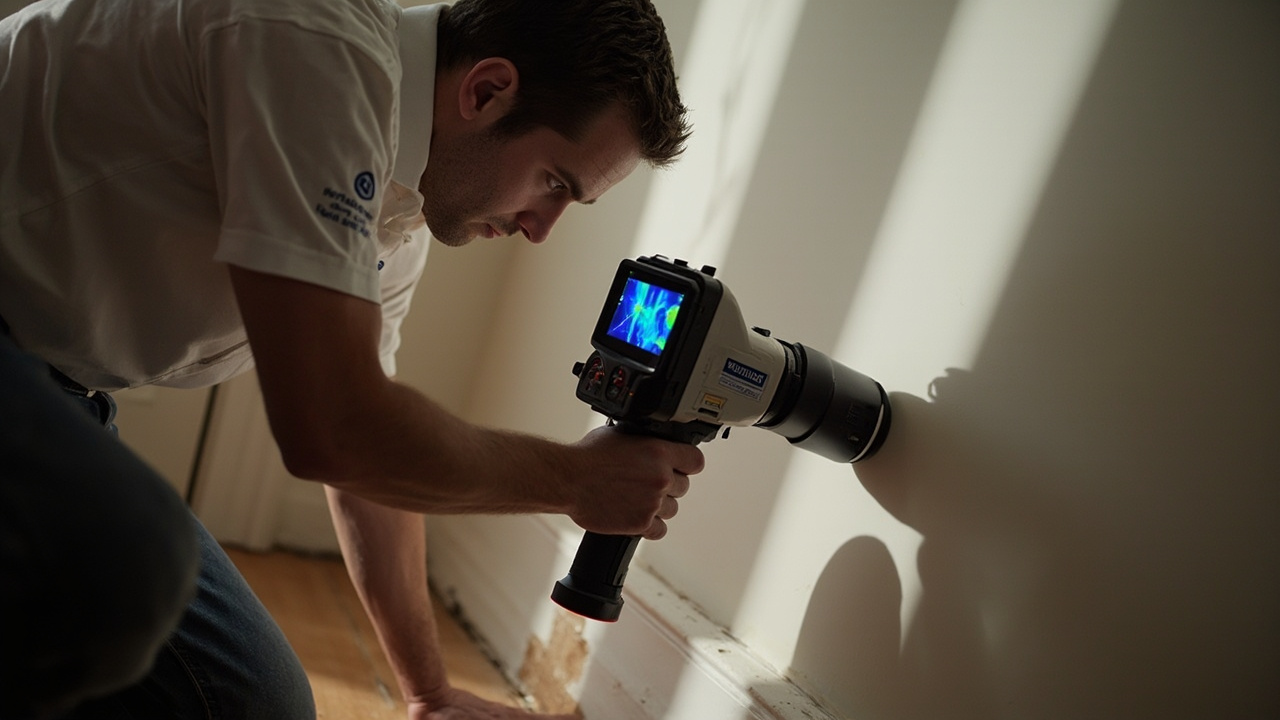
Spotting hidden water damage requires precision tools and trained interpretation. We use FLIR thermal imaging cameras to map temperature differentials across wall and ceiling surfaces. Wet building materials hold heat differently than dry materials. The camera displays these variations as color gradients, revealing moisture patterns invisible to the naked eye.

Once we identify suspect areas, we deploy pin-type and non-invasive moisture meters. Pin meters penetrate drywall or wood to measure electrical resistance, which changes when water is present. Non-invasive meters scan large surface areas without creating holes, ideal for finished spaces or when testing multiple rooms. We log readings at multiple depths to determine whether moisture is surface-level condensation or deep saturation requiring demolition.

For complex investigations, we use hygrometers to measure relative humidity inside wall cavities. We drill a small access hole, insert a probe, and seal the opening temporarily. After equilibration, the reading tells us if trapped moisture is actively evaporating into the cavity or if the space is drying properly. This data determines whether we need to open walls or if monitoring is sufficient.

We also perform infrared scans of slab foundations. Radiant heat from pipes or post-tension cables creates thermal signatures. When a slab leak occurs, the thermal pattern changes. We can locate the leak within a few square feet, minimizing the concrete we need to remove for repair. This approach saves you demolition costs and reduces restoration time.

Summit Water Damage Restoration San Francisco combines these technologies with two decades of field experience. We do not guess. We measure, document, and verify before recommending any invasive work.

What Happens During a Moisture Detection Inspection

Hidden Moisture Detection in San Francisco – Stop Structural Damage Before It Spreads
01

Initial Thermal Scan

We begin with a room-by-room thermal imaging survey. The camera reveals temperature anomalies that indicate moisture accumulation behind finishes. We photograph each anomaly and mark it with tape for follow-up testing. This non-invasive step quickly maps the scope of the problem without drilling or cutting into your walls. You see what we see on the camera's LCD screen in real time.
02

Precision Moisture Measurement

We test each flagged area with calibrated moisture meters. Pin readings confirm the presence and depth of water. Non-invasive scans define the perimeter of saturation. We compare readings against baseline dry areas to eliminate false positives from thermal mass or HVAC airflow. All data is logged with photos and GPS coordinates for insurance documentation and restoration planning. This step determines whether you need emergency extraction or can monitor the area.
03

Report and Action Plan

You receive a detailed report with thermal images, moisture readings, affected square footage, and our recommended scope of work. We explain which materials must be removed, what can be dried in place, and where the water source is located. If you need a plumber or roofer, we coordinate that referral. Our goal is to give you the information you need to make an informed decision, not to upsell services you do not require.

Why San Francisco Property Owners Trust Our Moisture Detection Process

San Francisco's building stock is diverse. You have 1906 earthquake survivors with redwood framing, 1920s stucco bungalows with galvanized plumbing, and 1970s condos with polybutylene supply lines. Each construction type responds differently to water intrusion. We have investigated moisture problems in all of them.

We understand local failure patterns. The Richmond and Sunset districts face wind-driven rain that penetrates stucco cracks and window perimeters. South of Market lofts with concrete floors and exposed ductwork develop condensation on cold pipes during summer fog. Pacific Heights Victorians have cast iron drain stacks that corrode from the inside out, leaking between floors without visible evidence until the subfloor collapses.

Our technicians are trained to recognize these patterns. When we see a thermal signature in a specific location, we know which building system to investigate first. This expertise reduces diagnostic time and prevents unnecessary demolition. We do not open walls at random. We target the exact failure point.

We also know San Francisco's permit requirements. If your moisture problem requires structural repairs, we document conditions to support your permit application. If you are filing an insurance claim, our reports include the technical detail adjusters need to approve coverage. We have worked with every major carrier operating in the Bay Area.

Summit Water Damage Restoration San Francisco is a local company. We live in the neighborhoods we serve. When you call us, you speak to someone who understands the difference between a Sunset District basement seepage problem and a Telegraph Hill retaining wall issue. That local knowledge translates into faster, more accurate diagnostics and lower overall restoration costs.

What You Can Expect When You Schedule a Hidden Moisture Inspection

Same-Day and Emergency Availability

We offer same-day inspections for active leaks and emergency calls. If you discover water damage over the weekend or during evening hours, we dispatch a technician within two hours. For non-emergency investigations, we schedule within 24 to 48 hours. Most inspections take 60 to 90 minutes, depending on square footage and complexity. We arrive in marked vehicles with all necessary equipment. You do not need to provide access to attics or crawl spaces. We bring ladders, flashlights, and protective gear. Your only job is to point us toward the area of concern.

Comprehensive Onsite Assessment

Our technician walks the property with you, asking about the history of the problem. When did you first notice the issue? Have you had prior leaks? Have you made recent plumbing or roof repairs? We listen because this context guides our investigation. We then conduct the thermal scan and moisture testing described earlier. We do not charge extra for multiple rooms or follow-up scans if initial results are inconclusive. The goal is definitive answers, not hourly billing. You receive verbal findings before we leave and a written report within 24 hours.

Detailed Documentation and Photographic Evidence

You get a report that includes thermal images, moisture meter readings, annotated floor plans showing affected areas, and our analysis of the likely water source. Photos are date-stamped and geotagged. If you are filing an insurance claim, this documentation satisfies most carriers' requirements for proof of loss. If you are a property manager dealing with tenant complaints, the report provides objective evidence of conditions. We also include recommendations for remediation scope and estimated timelines. This transparency helps you budget accurately and avoid scope creep during restoration.

Post-Remediation Verification Testing

After water extraction and drying, we return to verify that moisture levels have dropped to acceptable ranges. We re-scan the affected areas and compare readings to the initial baseline. Materials must reach equilibrium moisture content before reconstruction begins. Closing up walls or installing new flooring over damp substrates guarantees mold growth and finish failure. We provide a clearance letter once drying is complete. This protects you from future liability and ensures your restoration contractor is not working on compromised materials. We also offer annual re-inspections for properties with chronic moisture issues or for landlords who want to document conditions between tenants.

Frequently Asked Questions

You Have Questions,
We Have Answers

Why does my phone say moisture detected when there is no moisture? +

Your phone detects moisture or condensation inside the charging port, even if you cannot see it. This happens after humid conditions, rain exposure, or sweat transfer. San Francisco's foggy mornings and microclimates create condensation issues, especially near the coast. The sensor triggers to prevent short circuits when liquid bridges the charging pins. Try gently tapping the phone port-down to remove droplets, then let it air dry in a warm room for 30 minutes. Avoid rice, which leaves debris. If the alert persists after drying, debris or corrosion may fool the sensor.

Do moisture detectors really work? +

Yes, moisture detectors work reliably when calibrated correctly and used on appropriate materials. Professional-grade meters use pin-type or pinless technology to measure water content in wood, drywall, and concrete. They detect hidden leaks behind walls, under floors, and in ceilings before visible damage appears. In San Francisco's older Victorian and Edwardian homes, these tools locate moisture trapped in plaster walls or beneath original hardwood floors. Consumer-grade models vary in accuracy. Professional restoration teams use multiple detection methods, including thermal imaging and hygrometers, to confirm findings and prevent false readings from building materials or environmental factors.

How do I find out where my moisture is coming from? +

Start by inspecting visible areas: check under sinks, around toilets, near water heaters, and along exterior walls. Look for stains, warping, or musty odors. In San Francisco homes, check crawl spaces and basements after heavy rain, as groundwater intrusion is common in certain neighborhoods. Use a flashlight to trace water stains upward to their source. If the origin remains unclear, call a water damage professional with thermal imaging cameras and moisture meters. They map moisture patterns through walls and ceilings without demolition, identifying leaks from plumbing, roofing, or foundation cracks that self-inspection misses.

How to detect moisture behind walls? +

Professionals use non-invasive pinless moisture meters that scan through drywall and plaster without drilling holes. These sensors detect moisture up to one inch deep by measuring electrical impedance or capacitance changes. Thermal imaging cameras reveal temperature differences caused by wet insulation or framing behind walls. In San Francisco's older homes with lath-and-plaster construction, these tools prevent unnecessary wall damage during inspection. For concrete or thicker materials, pin-type meters with deep probes confirm readings. Moisture mapping combines multiple readings across wall sections to trace the exact leak path from hidden pipes, roof penetrations, or exterior cladding failures.

How do I bypass the moisture detection? +

Do not bypass moisture detection warnings on phones or devices. The alert protects your charging port and internal components from short circuits and corrosion. Ignoring it risks permanent hardware damage. Instead, address the moisture issue. Power off the device, remove any case, and let it air dry port-down for at least 30 minutes in a dry environment. San Francisco's fog and coastal humidity delay drying times compared to inland areas. Use a fan to accelerate evaporation, but avoid heat sources that warp components. If the warning persists after thorough drying, the sensor may need professional cleaning or replacement.

Will the moisture detection go away on its own? +

Moisture detection alerts usually clear after the affected area dries completely. Phones and electronics typically reset once condensation evaporates from charging ports, which takes 30 minutes to several hours depending on humidity levels. San Francisco's persistent fog and marine layer slow natural drying, especially in western neighborhoods near the ocean. For building materials, trapped moisture does not evaporate without intervention. Water behind walls, under floors, or in insulation requires professional extraction and drying equipment. Waiting causes mold growth, structural rot, and worsening damage. Address moisture problems immediately rather than hoping they resolve independently.

What can throw off a moisture meter? +

Several factors cause false moisture meter readings. High ambient humidity fools sensors into registering surface moisture on dry materials. Metal components like nails, pipes, or wire mesh behind walls create false positives because meters detect electrical conductivity. Dense hardwoods, concrete additives, and salt residues also skew results. In San Francisco, residual salt spray near coastal areas affects exterior wall readings. Surface condensation from temperature differences between indoor and outdoor air mimics deeper moisture issues. Professional inspectors calibrate meters for specific materials, take multiple readings, and use thermal imaging to confirm actual water intrusion versus environmental interference or construction variables.

How long do moisture sensors last? +

Quality moisture sensors in professional-grade meters last five to ten years with proper care and periodic calibration. Pin-type probes wear faster from repeated insertion and require replacement every two to three years depending on use frequency. Pinless sensors have longer lifespans but need calibration checks annually to maintain accuracy. Consumer-grade detectors degrade faster, often losing precision after 18 months of regular use. In San Francisco's humid coastal climate, moisture meters stored improperly develop corrosion or sensor drift. Professional restoration companies maintain equipment rigorously, replacing sensors before accuracy declines to ensure reliable detection during water damage assessments and restoration verification.

What is the best moisture tester? +

Professional restoration teams rely on dual-mode meters that combine pin and pinless technology for comprehensive detection. Brands like Tramex, Protimeter, and Delmhorst offer calibrated accuracy across multiple materials. Pin meters provide precise depth readings in wood and drywall. Pinless scanners quickly survey large wall sections without surface damage. Thermal imaging cameras complement moisture meters by revealing temperature patterns invisible to sensors alone. For San Francisco homeowners, professional-grade detection matters more than equipment brand. Certified water damage technicians interpret readings correctly, account for building materials common in older Bay Area homes, and distinguish between active leaks and residual moisture from fog.

Can mold grow in 50% humidity? +

Mold can grow at 50 percent humidity if other conditions align. Spores need moisture, organic material, and temperatures between 40 and 100 degrees. While 60 percent humidity accelerates growth, 50 percent supports slow colonization on porous surfaces like drywall, wood, and fabric, especially with poor ventilation. San Francisco homes face mold risk from persistent fog, which raises indoor humidity and deposits surface moisture on cool walls. Basements, crawl spaces, and north-facing rooms stay damp longer. Even moderate humidity becomes problematic when combined with water intrusion, condensation, or inadequate airflow. Keep indoor humidity below 50 percent and address leaks immediately.

How San Francisco's Fog Belt and Victorian Architecture Complicate Moisture Detection

San Francisco's microclimates create humidity gradients that vary by neighborhood. The Richmond and Sunset districts experience dense fog more than 100 days per year. This persistent moisture condenses on cold surfaces like single-pane windows, uninsulated exterior walls, and concrete foundation stems. Victorian homes in these areas often lack vapor barriers behind plaster walls. When exterior moisture migrates inward and combines with interior humidity from showers and cooking, the wall cavity becomes a reservoir. Locating concealed dampness in these multi-layer assemblies requires scanning from both sides of the wall and correlating thermal data with cavity humidity readings.

San Francisco's Department of Building Inspection requires specific protocols for work on structures built before 1978 due to lead paint and asbestos concerns. When we identify hidden water damage that requires demolition, we coordinate with certified environmental contractors to test and abate hazardous materials before restoration begins. Our moisture detection reports document pre-existing conditions, which protects you during permit review and ensures compliance with Title 24 energy code requirements if wall insulation must be upgraded during reconstruction. Working with a local provider who understands these regulatory layers prevents costly delays and rework.
Water Damage Restoration Services in The San Francisco Area

Our commitment to rapid response means we cover the entire San Francisco area and surrounding communities. View the map below to visualize our primary service region, which includes key neighborhoods and business districts. Whether you are located in the Financial District, the Mission, or out toward the Sunset, you can trust our 24/7 team to reach you quickly. We proudly serve both residential and commercial clients across the entire map, guaranteeing a fast and effective mitigation service the moment you need us.

Address:
Summit Water Damage Restoration San Francisco, 1390 Market St, San Francisco, CA, 94102

Additional Services We Offer

Our news updates

Latest Articles & News from The Blogs

What Happens if Your Home Addition Gets Flooded During Construction in Noe Valley Water flooding your home addition during construction…

What Happens if Your Home Addition Gets Flooded During Construction in Noe Valley

What Happens if Your Home Addition Gets Flooded During Construction in Noe Valley Water flooding your home addition during construction…

How San Francisco Summer Fog Can Cause More Water Damage Than Winter Rain

How San Francisco Summer Fog Can Cause More Water Damage Than Winter Rain San Francisco’s famous summer fog, known locally…

Why Your Chronic Cough Might Actually Be a Hidden Mold Problem in the Richmond District

Why Your Chronic Cough Might Actually Be a Hidden Mold Problem in the Richmond District If you’ve lived in San…

Contact Us

Call Summit Water Damage Restoration San Francisco at (415) 449-6555 right now. We will schedule your moisture detection inspection within 24 hours and give you answers, not estimates. Stop guessing where the water is hiding.