menu

Emergency Roof Leak Tarping in San Francisco – 24/7 Dispatch Within 60 Minutes

When your roof fails during a storm, every minute counts. Our emergency roof tarp installation teams respond immediately across San Francisco, protecting your property from cascading water damage before structural failure spreads.

Slider Image 1
Slider Image 2
Slider Image 3
Slider Image 4
Slider Image 5
Slider Image 7
Slider Image 8
Slider Image 9
Slider Image 10
Slider Image 11

Why San Francisco Roofs Fail Without Warning

San Francisco's unique microclimate puts extreme stress on roofing systems. The coastal fog cycles between saturating moisture and rapid drying, creating expansion and contraction that breaks down roofing materials faster than inland areas. When atmospheric rivers roll in from the Pacific, your roof takes a beating. Aging terra cotta tiles common in the Mission District and Richmond neighborhoods crack under thermal stress. Flat commercial roofs in SoMa pooling water after heavy rain. Deteriorated flashing around chimneys in Victorian homes finally gives way.

You are dealing with an active leak right now. Water is infiltrating your attic, saturating insulation, and tracking down wall cavities toward electrical systems. In San Francisco's dense housing stock, a roof breach can quickly spread damage to adjacent units in multi-family buildings. The clock is ticking.

Our 24 hour roof tarping service exists for this exact moment. We dispatch teams across the city, from the Sunset District to North Beach, with commercial-grade tarps, anchor systems, and the climbing equipment needed to secure steep Victorian roof pitches safely. Emergency temporary roof covering stops the water intrusion immediately while you coordinate permanent repairs with your insurance company. We understand that urgent roof tarping services are not about cosmetics. They are about preventing a $5,000 leak from becoming a $50,000 structural disaster.

Why San Francisco Roofs Fail Without Warning
How We Secure Your Roof Against Further Damage

How We Secure Your Roof Against Further Damage

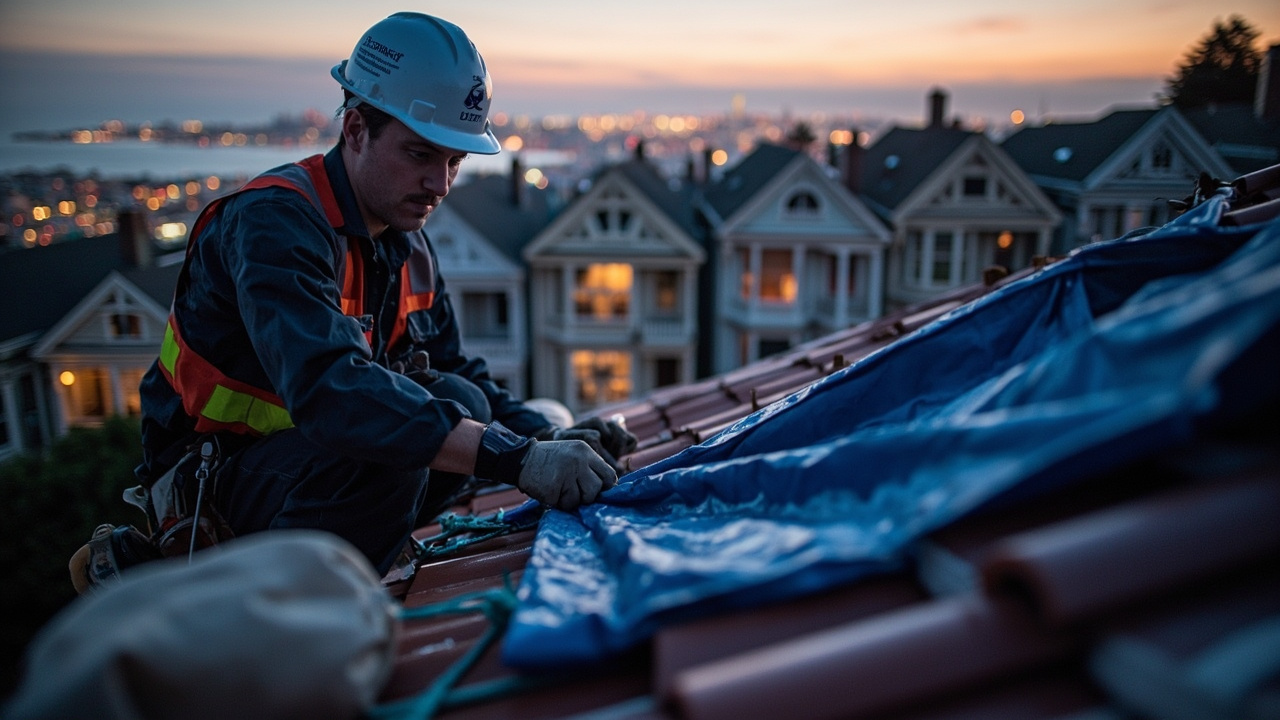
Emergency roof leak tarp service requires more than throwing a blue tarp over the hole. San Francisco's wind conditions, especially on western slopes facing the ocean, will rip away improperly secured tarps within hours. We use a mechanical fastening system that anchors into solid roof decking, not just shingles or tiles. Each tarp receives sandbag ballast on flat sections and screwed battens on pitched roofs to prevent wind uplift.

Our process starts with damage assessment from the interior. We trace the water entry point by checking attic spaces for active drips, then correlate that to the exterior breach location. Roof leaks rarely appear directly below the entry point. Water travels along rafters and sheathing before dripping through ceilings. We mark the exact penetration site, then move to exterior access.

For multi-story buildings common in Pacific Heights or Russian Hill, we use extension ladders with standoff stabilizers to avoid damaging gutters. On commercial flat roofs, we access through interior stairwells when possible to avoid exposing clients to liability. The tarp extends at least four feet beyond the damaged area in all directions, creating a watershed that diverts water away from the breach. We seal all edges with lumber battens screwed through the tarp into roof decking, then apply additional mechanical fasteners every 18 inches along high-stress edges.

This is not temporary. Our emergency roof tarp installation can protect your property for weeks or months while you navigate insurance claims and contractor scheduling.

What Happens When You Call for Emergency Tarping

Emergency Roof Leak Tarping in San Francisco – 24/7 Dispatch Within 60 Minutes
01

Immediate Dispatch and Assessment

You call our emergency line, and we dispatch a two-person crew to your San Francisco location immediately. While en route, our team coordinator asks targeted questions about the leak location, roof type, and access points. We arrive with tarps in multiple sizes, fastening hardware, and safety equipment. The first step on site is a visual inspection from the interior to locate active water intrusion, then an exterior assessment to identify the breach and surrounding damage.
02

Tarp Installation and Securing

Our crew positions the tarp to cover the damaged area with adequate overlap for water diversion. We use screwed battens and mechanical fasteners to anchor the tarp directly into sound roof decking, avoiding reliance on compromised materials. Each edge receives reinforced fastening at stress points. On steep Victorian roof pitches, we add sandbag ballast and rope tie-downs to secondary anchor points. The installation resists wind speeds up to 50 mph common during San Francisco storm systems.
03

Documentation and Next Steps

Before leaving, we photograph the damage and tarp installation for your insurance claim. You receive a detailed scope of work document describing the breach location, estimated cause, and temporary protection measures installed. We coordinate with your insurance adjuster if needed and provide referrals to licensed roofing contractors for permanent repairs. The emergency temporary roof covering remains secure while you schedule restoration work. We offer follow-up inspections after subsequent storms to ensure the tarp integrity holds.

Why San Francisco Property Owners Choose United Water Damage Restoration Los Angeles

When your roof fails at 2 a.m. during a Pacific storm, you need a team that understands San Francisco's building stock and weather patterns. We have secured roofs across every neighborhood in this city, from the tight lot lines of the Inner Sunset where ladder placement requires precision, to the historic preservation requirements in Alamo Square where we cannot penetrate certain roof sections.

Our crews carry liability coverage and workers compensation insurance because roof access in San Francisco is inherently dangerous. We do not send untrained laborers with a tarp and some bricks. Every technician completes fall protection training and uses OSHA-compliant safety equipment on every job. You are not liable if someone gets hurt on your property during our emergency response.

We also understand San Francisco's building codes and permitting requirements. While emergency tarping does not require a permit, the permanent repairs will. We provide documentation that meets insurance company standards and can coordinate directly with adjusters who need photo evidence of the damage before authorizing repair costs. Many property owners discover their policies cover emergency mitigation costs, including our tarping service, even before the deductible applies.

United Water Damage Restoration Los Angeles maintains relationships with licensed roofing contractors across the Bay Area. We can refer you to specialists who understand Spanish tile repair, built-up flat roof systems, or historic building restoration depending on your property type. Our job is to stop the bleeding right now. Then we help you navigate the repair process without pressure or upselling.

What to Expect from Our Emergency Response

Response Time and Availability

We dispatch crews 24 hours a day, 365 days a year. During active storm systems, we pre-position teams in high-risk neighborhoods across San Francisco to reduce response times. You can expect a crew on site within 60 to 90 minutes of your call during normal conditions. During major weather events when call volume spikes, we triage based on severity. Active leaks threatening electrical systems or occupied living spaces receive priority dispatch. Our goal is simple: get water-tight protection installed before additional damage occurs.

Damage Assessment and Scope

Our technicians perform a thorough inspection of the breach area and surrounding roof sections. We check for secondary damage like compromised sheathing, saturated insulation, or structural concerns that require immediate attention beyond tarping. You receive a verbal walkthrough of our findings and a written damage assessment. We identify whether the failure resulted from storm damage, wear and tear, or installation defects. This information proves critical when filing insurance claims. We photograph all damage before and after tarp installation to document the loss and our mitigation efforts.

Tarp Quality and Protection Level

We use heavy-duty polyethylene tarps rated for exterior exposure, not the thin blue tarps sold at hardware stores that degrade in sunlight within weeks. Our tarps withstand UV exposure, wind stress, and repeated wet-dry cycles common in San Francisco's climate. The mechanical fastening system we install prevents wind uplift and edge flutter that causes tarp failure. You get weathertight protection that can last months if needed. The tarp prevents rain intrusion, wind-driven moisture, and further deterioration of exposed roof decking while you arrange permanent repairs.

Follow-Up and Coordination

After installation, we provide you with documentation for your insurance company and contact information for follow-up questions. If additional storms damage the tarp or if you need adjustments, we return to reinforce or replace the covering at no additional charge for the first 30 days. We coordinate with your roofing contractor when you are ready for permanent repairs, providing access details and damage notes. Our role is to bridge the gap between emergency and restoration. We stay available throughout your repair process to ensure the temporary protection holds until your roof is permanently restored.

Frequently Asked Questions

You Have Questions,
We Have Answers

Can I put a tarp on my roof to stop leaks? +

Yes, you can put a tarp on your roof to stop leaks, but it requires proper placement and securing. A tarp provides temporary protection until professional repairs happen. In San Francisco's windy conditions and sudden rain events, improper tarping can fail quickly or damage your roof further. The tarp must extend past the leak source, wrap over the roof ridge, and secure with weighted boards or sandbags. Never nail through shingles. If you feel unsafe climbing onto your roof during active leaks, call a professional immediately. Tarping buys time but does not replace proper repair.

How to temporarily cover a leaking roof? +

To temporarily cover a leaking roof, identify the leak source from inside your home, then carefully access the roof exterior. Place a heavy-duty polyethylene tarp over the damaged area, extending at least four feet beyond the leak in all directions. The tarp should drape over the roof ridge if possible. Secure edges with sandbags or lumber weighted down. Never use nails or screws through good roofing material. San Francisco's fog and wind demand extra anchoring. If the leak is active during rain, work fast but safely. Professional tarping services respond 24/7 for emergency situations.

How to emergency tarp a roof? +

Emergency tarping requires speed and safety. First, stop interior water damage by placing buckets and moving valuables. Locate the leak from inside, then carefully access the roof. Use a heavy-duty tarp measuring at least 10x12 feet. Position it to cover the damaged area plus four feet of overlap in every direction. Drape the tarp over the ridge line if accessible. Anchor securely with sandbags or 2x4 boards. In San Francisco's unpredictable weather, wind uplift is your enemy. Secure all edges tightly. If conditions are dangerous or the roof is steep, call professionals immediately. Your safety matters more than property.

How much does it cost to emergency tarp a roof? +

Emergency roof tarping typically costs between $200 and $1,500 depending on roof size, accessibility, and damage extent. Steep roofs, multi-story homes, and after-hours calls increase costs. In San Francisco, where many homes feature complex Victorian rooflines and steep pitches, expect higher pricing than flat suburban roofs. Most water damage restoration companies include tarping as part of emergency response services. Insurance often covers emergency tarping under your policy's emergency mitigation clause. Get documentation and photos for your claim. Pricing varies by company, but delaying tarping leads to exponentially higher repair costs from continued water intrusion and mold growth.

How do you stop a leaking roof during heavy rain? +

Stop a leaking roof during heavy rain by placing containers underneath active drips inside your home first. Move furniture and electronics away from water. If safe, access the attic and place a tarp or plastic sheeting under the leak to channel water into buckets. From outside, quickly cover the leak source with a tarp secured by sandbags. San Francisco's sudden storm systems require fast action. Do not climb onto a wet, slippery roof during active rain. Call emergency roof tarping professionals who have safety equipment and experience working in hazardous conditions. Document everything for insurance while protecting your home.

Why are people putting blue tarps on their roof? +

Blue tarps appear on roofs after storm damage, fires, or during delayed repairs. The bright blue color makes damage visible to insurance adjusters and contractors. Blue polyethylene tarps are affordable, UV-resistant, and waterproof, making them ideal for temporary roof protection. In San Francisco neighborhoods, you see blue tarps after winter storm damage or fire events. They signal emergency mitigation in progress. However, tarps degrade over time and become neighborhood eyesores. Prolonged tarping can indicate insurance disputes or contractor delays. Tarps are temporary solutions only. Permanent repairs should follow within weeks to prevent further deterioration and code violations.

What can I use instead of tarping my roof? +

Alternatives to tarping include emergency roof patching with roofing cement and fabric mesh, temporary shingle replacement, or plywood sheathing over damaged sections. Roofing contractors can apply rubberized coatings or spray-on sealants for small leaks. However, these methods require dry conditions and professional application. In San Francisco's frequent fog and rain, tarping often remains the most practical emergency solution. Some homeowners attempt plastic sheeting with tape, but this fails quickly in wind. For flat or low-slope roofs, professional-grade roll roofing can provide better temporary coverage than tarps. Consult a roofing professional to determine the best emergency solution for your specific damage.

Does flex seal work on roof leaks? +

Flex Seal may stop very minor roof leaks temporarily, but it does not replace professional repair. This rubberized coating works best on small cracks or gaps in dry conditions. San Francisco's persistent fog and dampness prevent proper adhesion. Flex Seal cannot handle structural damage, missing shingles, or active water flow. It also voids many roofing warranties if applied incorrectly. For emergency situations, Flex Seal wastes valuable time when proper tarping or professional repair is needed. Insurance adjusters often view DIY sealants unfavorably. Use Flex Seal only for tiny, non-emergency situations on non-critical surfaces, never as a primary roof leak solution.

Can I apply roof Maxx myself? +

Roof Maxx is a soy-based rejuvenation treatment applied by certified professionals only. You cannot apply it yourself. The product requires specific equipment, training, and roof condition assessment. Roof Maxx does not stop active leaks. It restores flexibility to aging asphalt shingles, extending their lifespan by five years per application. In San Francisco's foggy climate, shingles dry out slower than inland areas, but UV exposure still degrades them. Roof Maxx works only on shingles with sufficient life remaining. If your roof is leaking now, you need emergency repair or tarping, not rejuvenation treatment. Schedule Roof Maxx as preventive maintenance, not emergency response.

Will Fema put a tarp on my roof? +

FEMA provides blue roof tarping only after presidentially declared disasters through the U.S. Army Corps of Engineers. This free service covers homeowners in affected counties who cannot afford temporary repairs. However, most roof leaks do not qualify. San Francisco has not required federal disaster tarping assistance in recent years. FEMA prioritizes homes with structural damage posing immediate safety threats. The program has strict eligibility requirements and long wait times. For standard roof leaks, you must arrange private tarping through roofing contractors or water damage restoration companies. Your homeowners insurance typically covers emergency tarping costs under loss mitigation provisions.

How San Francisco's Coastal Weather Makes Emergency Tarping Critical

San Francisco receives most of its annual rainfall between November and March when atmospheric river events dump inches of rain in 24-hour periods. These intense storm systems often arrive in rapid succession, giving roofs no time to dry between soakings. The marine layer fog that blankets western neighborhoods keeps roofing materials damp for extended periods, accelerating rot and material breakdown. When a roof fails during these wet months, exposed sheathing and framing absorb moisture quickly. Without immediate emergency roof tarp installation, you face mold growth within 48 hours and structural wood decay within weeks. The combination of prolonged moisture exposure and San Francisco's moderate temperatures creates ideal conditions for fungal growth that spreads through attic spaces rapidly.

San Francisco's Department of Building Inspection requires proper documentation for insurance claims involving structural damage. Our emergency tarping service provides the photo evidence and written assessments that adjusters require to authorize repairs. We understand local building code requirements for roof replacement and can identify when damage extends beyond simple patching to full replacement needs. Many San Francisco properties sit in Historic Preservation Districts where roof repairs require Planning Department approval. We document existing conditions thoroughly so your contractor can navigate the permitting process efficiently. Choosing a local emergency response team means working with professionals who understand these regulatory requirements and can protect your interests during the claims process.
Water Damage Restoration Services in The San Francisco Area

Our commitment to rapid response means we cover the entire San Francisco area and surrounding communities. View the map below to visualize our primary service region, which includes key neighborhoods and business districts. Whether you are located in the Financial District, the Mission, or out toward the Sunset, you can trust our 24/7 team to reach you quickly. We proudly serve both residential and commercial clients across the entire map, guaranteeing a fast and effective mitigation service the moment you need us.

Address:
Summit Water Damage Restoration San Francisco, 1390 Market St, San Francisco, CA, 94102

Additional Services We Offer

Our news updates

Latest Articles & News from The Blogs

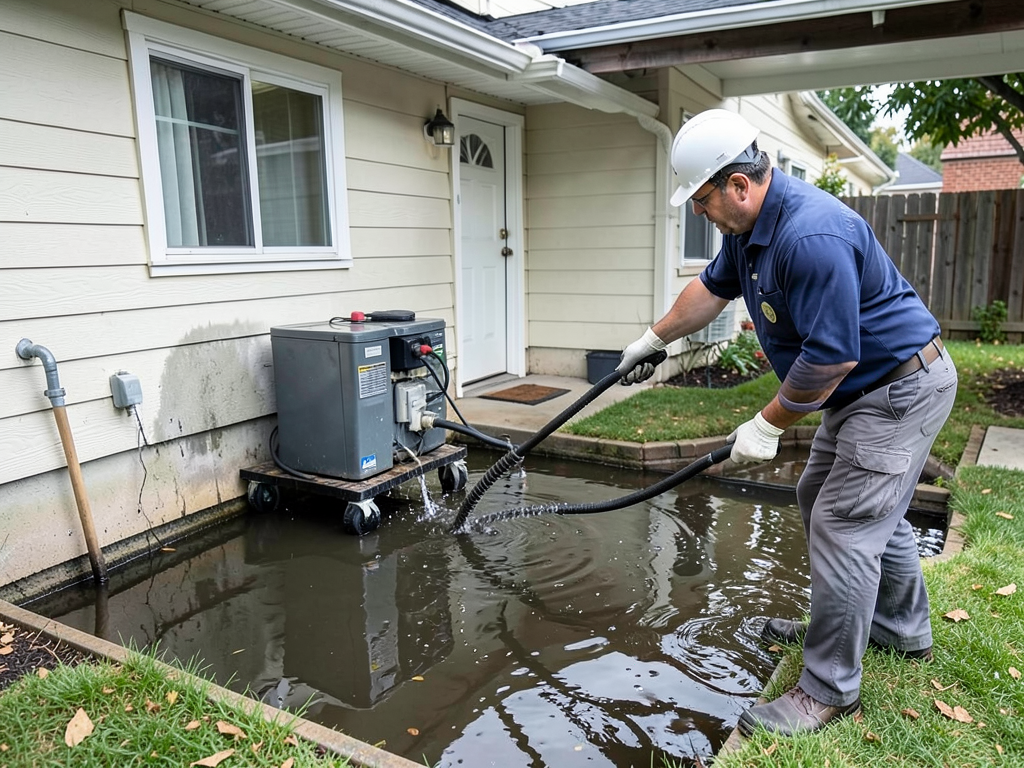
What to Do if Your New Backyard ADU Floods During a Heavy San Francisco Rain A sudden downpour in San…

What to Do if Your New Backyard ADU Floods During a Heavy San Francisco Rain

What to Do if Your New Backyard ADU Floods During a Heavy San Francisco Rain A sudden downpour in San…

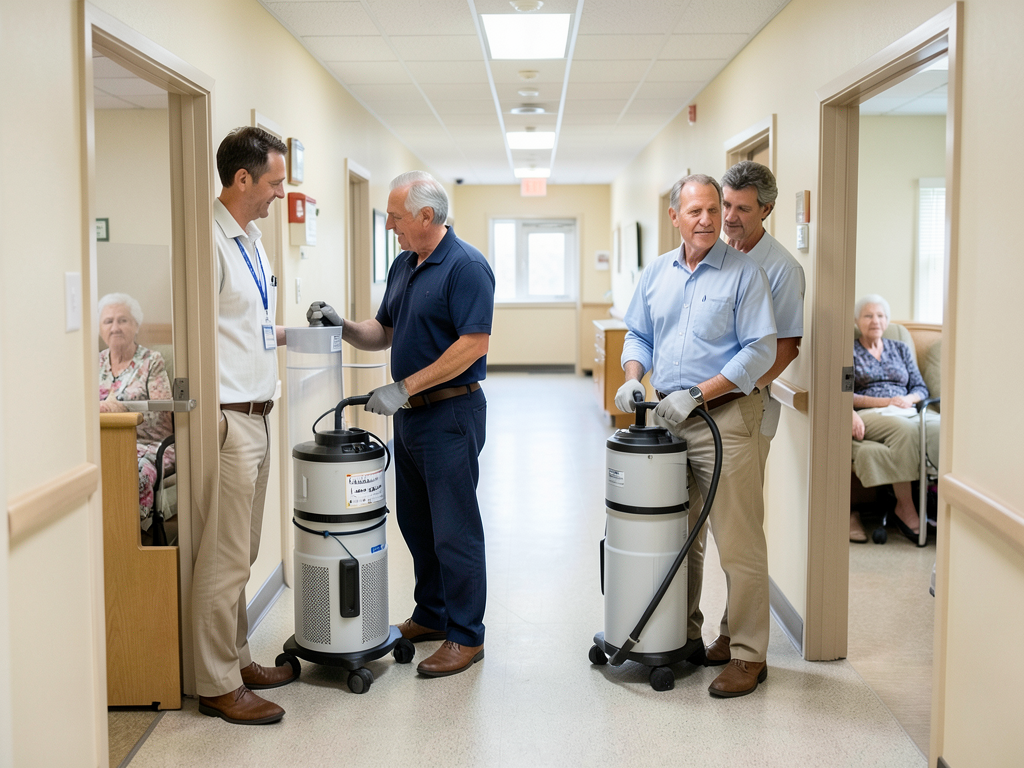
Selecting a Restoration Partner for Vulnerable Residents in a Richmond District Care Home

Specialized Senior Living Water Restoration Services in San Francisco Water damage in a Richmond District care home requires more than…

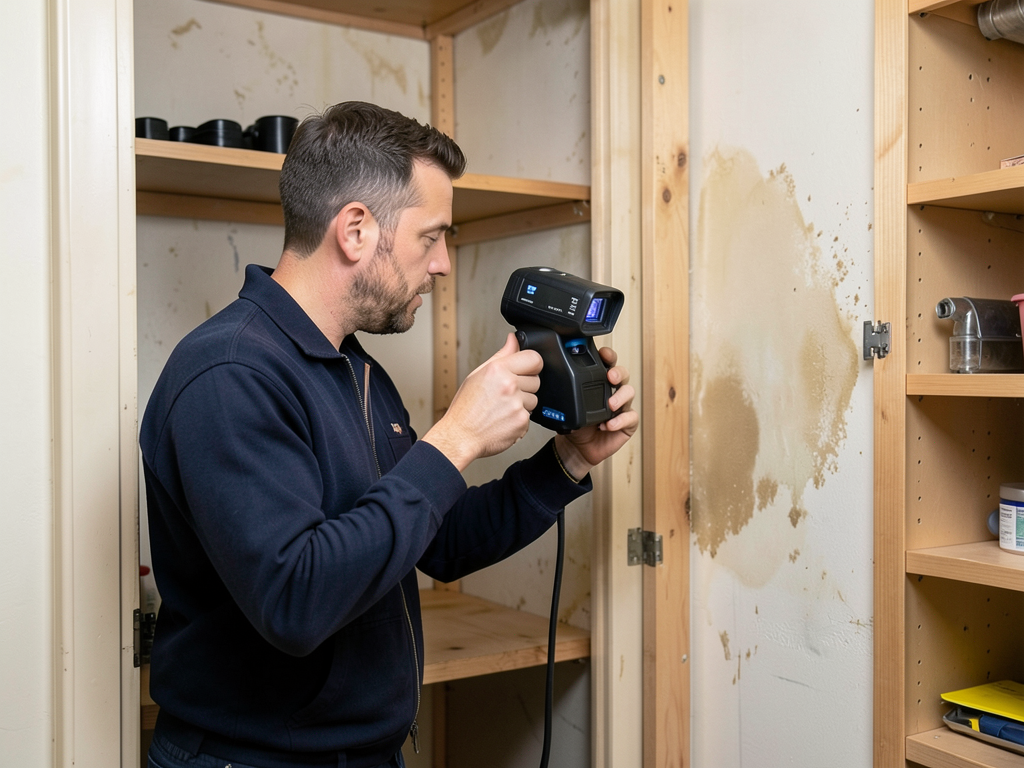
Why Your Noe Valley High Efficiency Boiler Could Be Slowly Flooding Your Utility Closet

Why Your Noe Valley High Efficiency Boiler Could Be Slowly Flooding Your Utility Closet If you live in a Noe…

Contact Us

Your roof is leaking right now. Every minute increases water damage and repair costs. Call United Water Damage Restoration Los Angeles at (415) 449-6555 for immediate dispatch. Our crews are standing by 24/7 to secure your property.