
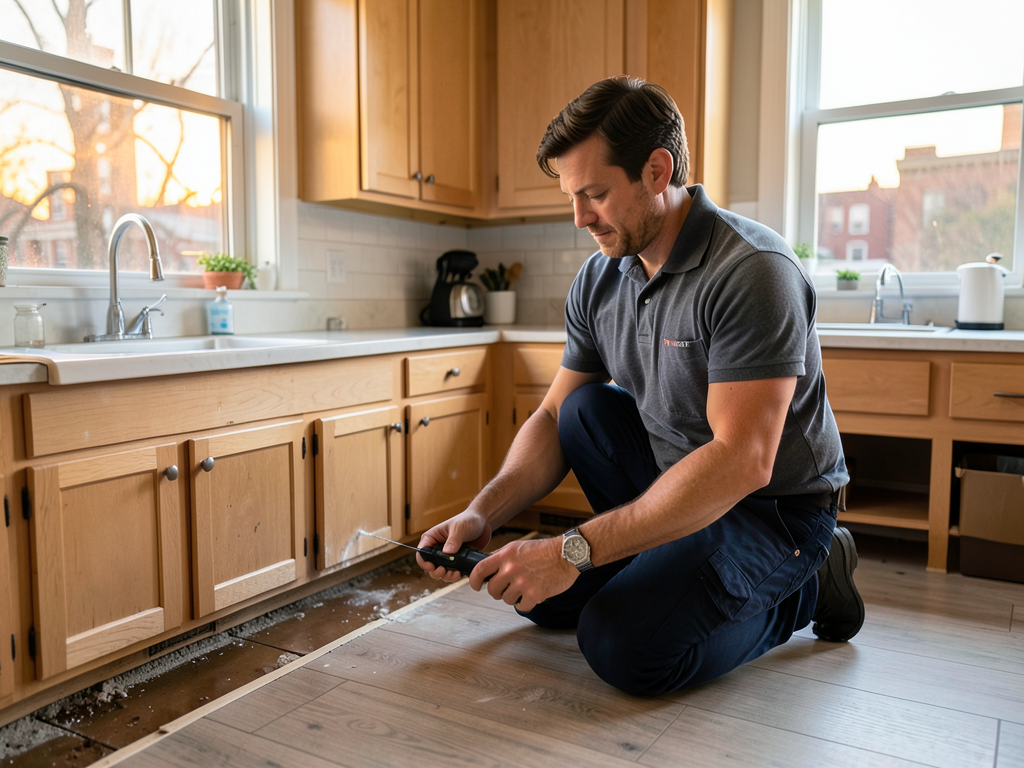
Choosing Between Luxury Vinyl Plank and Tile for a Water Resistant Kitchen in the Sunset District
San Francisco’s Sunset District faces unique moisture challenges with persistent coastal fog and occasional heavy rains. When selecting kitchen flooring after water damage, homeowners need materials that withstand the city’s damp climate while offering durability and style. This guide compares Luxury Vinyl Plank (LVP) and tile through the lens of a San Francisco water damage restoration expert. Tile Council of North America (TCNA) Handbook.
The Sunset District’s microclimate creates specific challenges for kitchen flooring. Dense fog rolls in from the Pacific Ocean, bringing moisture that seeps into older homes through foundation cracks and poorly sealed windows. The area’s historic homes, built between the 1920s and 1950s, often feature subfloors that have settled unevenly over decades. These factors make moisture resistance and proper installation critical when choosing between LVP and tile.. Read more about The Critical First 24 Hours After Finding a Leak in Your Inner Sunset Home.
Luxury Vinyl Plank (LVP): The Modern Waterproof Choice
LVP has revolutionized kitchen flooring with its 100% waterproof construction and realistic wood appearance. The material consists of multiple layers including a waterproof core, photographic layer, and protective wear layer typically ranging from 6 to 20 mils thick. Who to call for emergency water damage repair in San Francisco right now.
For Sunset District homes, LVP offers several advantages. The material handles temperature fluctuations common in San Francisco’s fog-prone areas without warping. Its click-lock installation system works well over uneven subfloors typical in older homes where foundation settling has occurred. The material also provides warmth underfoot, a significant benefit in the district’s cool climate. How to handle basement flooding in San Francisco after a heavy rainstorm.
However, LVP installation requires careful consideration. The material can telegraph subfloor imperfections, making proper subfloor preparation essential. In homes with the district’s common pier-and-beam foundations, moisture barriers become critical to prevent condensation from forming beneath the planks.
Restoration Perspective: After a kitchen leak, LVP often proves easier to salvage. The click-lock system allows individual planks to be removed, dried, and reinstalled if water damage is caught early. This can save thousands in replacement costs compared to tile demolition.
Tile: The Gold Standard for Durability
Ceramic and porcelain tile remain the traditional choice for water-resistant kitchens. Porcelain tile, fired at higher temperatures than ceramic, offers superior density and water resistance with absorption rates below 0.5%. Fast water restoration services for SoMa businesses and tech offices.
In San Francisco’s historic homes, tile provides unmatched longevity. The material withstands decades of use without showing wear, making it ideal for investment properties where long-term durability matters. Tile also handles the district’s temperature variations well, though it can feel cold underfoot during foggy mornings.. Read more about How San Francisco Summer Fog Can Cause More Water Damage Than Winter Rain.
The main consideration with tile is grout maintenance. San Francisco’s high humidity creates ideal conditions for mold growth in grout lines. Without proper sealing and maintenance, grout can become discolored and harbor moisture, leading to subfloor damage over time.. Read more about Navigating San Francisco Building Permits for Major Water Damage Repairs in the Outer Sunset.
Restoration Perspective: Tile requires no special drying procedures after water exposure since it doesn’t absorb moisture. However, if a dishwasher or refrigerator line fails, water can travel through grout lines and damage subfloors beneath. The key is rapid water extraction to prevent subfloor saturation.
Restoration Perspective: What Happens During a Leak?
Understanding how each material responds to water damage helps inform the selection process. In San Francisco’s aging housing stock, kitchen leaks often result from corroded supply lines, failed dishwasher connections, or ice maker malfunctions. High-end water damage restoration for historic Pacific Heights estates.
When water contacts LVP, the material typically floats on the subfloor rather than adhering to it. This design allows water to travel underneath the planks. If caught within 24-48 hours, the planks can be lifted, the subfloor dried with commercial-grade equipment, and the planks reinstalled. The process costs significantly less than full replacement.
Tile behaves differently. Water cannot penetrate through properly installed porcelain tile, but it can travel through grout lines. If water sits long enough, it can wick through grout and damage plywood subfloors. The restoration process involves removing affected grout, drying the subfloor, and potentially replacing sections of tile if staining occurs.
The critical factor is response time. San Francisco Building Code Section 108A.6 requires immediate action for water intrusion to prevent mold growth. Both materials benefit from rapid water extraction, but LVP’s modular nature provides more restoration options.
San Francisco Cost Comparison & ROI
Installation costs in San Francisco significantly exceed national averages due to labor rates and permit requirements. For a typical Sunset District kitchen (approximately 150 square feet), here’s what homeowners can expect:
| Material | Material Cost/SF | Installation Cost/SF | Total Cost (150 SF) | Typical Lifespan |
|---|---|---|---|---|
| LVP (12 mil wear layer) | $3.50 – $5.00 | $8.00 – $12.00 | $1,875 – $2,625 | 15-20 years |
| Porcelain Tile | $4.00 – $8.00 | $12.00 – $18.00 | $2,700 – $3,900 | 30-50 years |
The higher upfront cost of tile often translates to better long-term value in San Francisco’s competitive real estate market. According to Bay Area real estate data, homes with quality tile flooring typically see better returns during resale, particularly in the Sunset District where buyers expect durable, low-maintenance finishes.. Read more about Can Eco Friendly Bamboo or Cork Flooring Be Saved After a Major Water Leak?.
Permit requirements add another layer of consideration. San Francisco requires permits for flooring work when it involves structural changes or affects the building’s seismic safety. Tile installation over existing tile or on elevated floors often triggers permit requirements, adding $500-$1,500 to project costs.
Subfloor Preparation for Uneven Floors in Historic SF Homes
Sunset District homes built before 1970 often have subfloors that have settled unevenly over time. This creates challenges for both LVP and tile installation.
For LVP, the subfloor must be relatively flat within 3/16 inch over 10 feet. Achieving this in older homes typically requires self-leveling compound application, which adds $2-$4 per square foot to installation costs. The compound must cure completely before installation, adding time to the project.
Tile requires even more stringent subfloor preparation. The Tile Council of North America (TCNA) Handbook specifies maximum variations of 1/8 inch over 10 feet for tile up to 15 inches. Achieving this standard in historic homes often requires extensive subfloor repair or replacement.
Moisture testing becomes critical before installation. San Francisco’s high humidity can cause moisture vapor emission from concrete subfloors. Testing involves placing plastic sheeting on the concrete for 72 hours and checking for condensation. Emission rates above 3 pounds per 1,000 square feet per 24 hours require moisture mitigation systems.
Waterproofing Membranes and Vapor Barriers for Bay Area Kitchens
San Francisco’s climate necessitates specific waterproofing approaches for both materials. The city’s proximity to the ocean means salt-laden air can accelerate material degradation if proper barriers aren’t installed.
For LVP installations over concrete, a vapor barrier underlayment with a perm rating below 0.3 prevents moisture from migrating upward. Products like DMX Airflow or similar dimpled membranes create an air gap that allows minor moisture to dissipate rather than accumulate beneath the flooring.
Tile installations require different approaches. Cement backer board provides a stable surface for tile while resisting moisture damage. When installed over wood subfloors, the backer board must be properly fastened to prevent flexing that could crack tiles. The TCNA recommends a deflection rating of L/360 for floor tile installations.
In kitchens with exterior walls, especially those facing the ocean, additional waterproofing may be necessary. This includes sealing around penetrations where plumbing enters the space and ensuring proper flashing at transitions to exterior doors.
Ease of Antimicrobial Treatment for LVP vs. Tile Grout
San Francisco’s damp climate creates conditions where mold and mildew can thrive, particularly in kitchens where food particles and moisture combine. Understanding how each material handles antimicrobial treatment helps inform long-term maintenance decisions.
LVP surfaces can be cleaned with a wide range of antimicrobial solutions without damage to the wear layer. The non-porous surface doesn’t harbor bacteria in the same way that grout lines can. Most manufacturers recommend pH-neutral cleaners to preserve the wear layer, but the material tolerates stronger solutions when necessary for disinfection.
Tile grout presents different challenges. Cement-based grout is porous and can absorb moisture and organic material, creating breeding grounds for mold. While epoxy grout resists staining and moisture better than cement grout, it still requires regular cleaning to prevent buildup.
The San Francisco Department of Public Health recommends specific cleaning protocols for food preparation areas. For tile grout, this typically involves weekly cleaning with a 10% bleach solution followed by thorough rinsing. LVP requires less aggressive cleaning but still benefits from regular disinfection, especially in homes with children or elderly residents.
Flood Recovery: Salvaging LVP vs. Tile After a Dishwasher Leak
Kitchen floods from appliance failures represent one of the most common water damage scenarios in Sunset District homes. Understanding how each material responds to flooding helps homeowners make informed decisions about restoration versus replacement.
When a dishwasher leaks while homeowners are away, water can spread across the kitchen floor for hours or even days. LVP’s modular construction allows for staged recovery. Technicians can lift affected planks, set up drying equipment, and often reinstall the same material once the subfloor reaches acceptable moisture content levels.
The process typically involves moisture mapping to identify affected areas, strategic removal of planks to access subfloor, and commercial drying equipment that can reduce moisture content from above 20% to below 12% within 48-72 hours. The key is preventing mold growth, which can begin within 24-48 hours of water exposure.
Tile recovery follows a different path. Since tile doesn’t absorb water, the focus shifts to subfloor moisture. Technicians use penetrating moisture meters to check subfloor moisture content. If levels remain elevated, they may need to remove sections of tile to access the subfloor for drying.
The restoration process for both materials must comply with IICRC S500 standards for water damage restoration. This includes proper documentation, moisture monitoring, and verification that materials have returned to pre-loss conditions before reconstruction begins. IICRC S500 water damage restoration standards.
Frequently Asked Questions
Which material handles San Francisco’s humidity better?
Both materials perform well in San Francisco’s humidity, but they handle moisture differently. LVP is completely waterproof and won’t be affected by humidity levels. Tile is also unaffected by humidity but can develop mold in grout lines if not properly maintained. The key difference is that LVP can be removed and dried if flooding occurs, while tile requires subfloor access for proper drying.
How long does installation take in a typical Sunset District kitchen?
LVP installation typically takes 1-2 days for a standard kitchen, including subfloor preparation. Tile installation requires 2-3 days minimum, with additional time needed for grout curing before the floor can bear weight. San Francisco permit processing can add 1-2 weeks to project timelines if required.
Can I install new flooring over existing tile or LVP?
Installing over existing flooring is possible but requires careful evaluation. LVP can sometimes be installed over existing tile if the surface is flat and stable, but height transitions at doorways become problematic. Tile cannot be installed over existing LVP due to height and stability concerns. Building Code Section 105.2 requires evaluation of structural implications when adding flooring layers.
What happens if I discover water damage during installation?
Water damage discovery during flooring installation is common in Sunset District homes. The installation should stop immediately, and a water damage restoration professional should evaluate the extent of damage. This often involves moisture mapping, checking for mold, and determining if structural repairs are needed before proceeding with flooring installation. Professional sewage cleanup and sanitization for Mission District basements.
How do I choose between materials for a rental property?
For rental properties, durability and ease of replacement become primary considerations. Tile offers superior longevity and can handle tenant wear and tear better than LVP. However, LVP provides better sound insulation and warmth, which can be important for tenant comfort. Consider your tenant demographic and property management preferences when making the decision.
Making Your Final Decision
The choice between LVP and tile ultimately depends on your specific situation in the Sunset District. Consider these factors when making your decision:
- Budget: LVP offers lower upfront costs but may need replacement sooner than tile
- Climate concerns: Both handle San Francisco’s climate well, but LVP provides better sound insulation
- Restoration potential: LVP can be partially replaced after damage, while tile requires more extensive repairs
- Property type: Historic homes may benefit from tile’s durability, while modern condos might suit LVP’s warmth
- Long-term plans: If selling within 5 years, LVP offers modern appeal; if holding long-term, tile’s durability may win out
Regardless of your choice, proper installation and moisture management remain critical for success in San Francisco’s unique environment. Work with contractors familiar with local building codes and the specific challenges of Sunset District homes.
Ready to make your decision or need help with water damage restoration? Call (415) 449-6555 today to schedule your inspection. Our team understands the unique challenges of Sunset District homes and can help you choose the right flooring solution for your kitchen.
Don’t wait until the next storm or appliance failure causes damage. Pick up the phone and call (415) 449-6555 before the next fog bank rolls in. We’re here 24/7 to help San Francisco homeowners protect their investments.
{
“@context”: “https://schema.org”,
“@type”: “BlogPosting”,
“headline”: “Choosing Between Luxury Vinyl Plank and Tile for a Water Resistant Kitchen in the Sunset District”,
“description”: “Compare LVP vs tile for Sunset District kitchens. Expert guide on moisture resistance, durability, and restoration after leaks in San Francisco’s foggy climate.”,
“wordCount”: 2179,
“datePublished”: “2026-06-04T09:02:00.000Z”,
“dateModified”: “2026-06-04T09:02:00.000Z”,
“inLanguage”: “en-US”,
“mainEntityOfPage”: {
“@type”: “WebPage”,
“@id”: “https://summitwaterdamagerestorationsanfrancisco.com”
},
“publisher”: {
“@type”: “LocalBusiness”,
“name”: “Summit Water Damage Restoration San Francisco”,
“url”: “https://summitwaterdamagerestorationsanfrancisco.com”
},
“author”: {
“@type”: “Organization”,
“name”: “Summit Water Damage Restoration San Francisco”,
“url”: “https://summitwaterdamagerestorationsanfrancisco.com”
},
“image”: {
“@type”: “ImageObject”,
“url”: “https://summitwaterdamagerestorationsanfrancisco.com/wp-content/uploads/2026/03/choosing-between-luxury-vinyl-plank-and-tile-for-a-1.png”
}
}
{
“@context”: “https://schema.org”,
“@type”: “LocalBusiness”,
“name”: “Summit Water Damage Restoration San Francisco”,
“url”: “https://summitwaterdamagerestorationsanfrancisco.com”,
“address”: {
“@type”: “PostalAddress”,
“addressLocality”: “San Francisco”
},
“areaServed”: {
“@type”: “City”,
“name”: “San Francisco”
}
}
{
“@context”: “https://schema.org”,
“@type”: “FAQPage”,
“mainEntity”: [
{
“@type”: “Question”,
“name”: “Restoration Perspective: What Happens During a Leak?”,
“acceptedAnswer”: {
“@type”: “Answer”,
“text”: “Understanding how each material responds to water damage helps inform the selection process. In San Francisco’s aging housing stock, kitchen leaks often result from corroded supply lines, failed dishwasher connections, or ice maker malfunctions. High-end water damage restoration for historic Pacific Heights estates.”
}
},
{
“@type”: “Question”,
“name”: “Which material handles San Francisco’s humidity better?”,
“acceptedAnswer”: {
“@type”: “Answer”,
“text”: “Both materials perform well in San Francisco’s humidity, but they handle moisture differently. LVP is completely waterproof and won’t be affected by humidity levels. Tile is also unaffected by humidity but can develop mold in grout lines if not properly maintained. The key difference is that LVP can be removed and dried if flooding occurs, while tile requires subfloor access for proper drying.”
}
},
{
“@type”: “Question”,
“name”: “How long does installation take in a typical Sunset District kitchen?”,
“acceptedAnswer”: {
“@type”: “Answer”,
“text”: “LVP installation typically takes 1-2 days for a standard kitchen, including subfloor preparation. Tile installation requires 2-3 days minimum, with additional time needed for grout curing before the floor can bear weight. San Francisco permit processing can add 1-2 weeks to project timelines if required.”
}
},
{
“@type”: “Question”,
“name”: “Can I install new flooring over existing tile or LVP?”,
“acceptedAnswer”: {
“@type”: “Answer”,
“text”: “Installing over existing flooring is possible but requires careful evaluation. LVP can sometimes be installed over existing tile if the surface is flat and stable, but height transitions at doorways become problematic. Tile cannot be installed over existing LVP due to height and stability concerns. Building Code Section 105.2 requires evaluation of structural implications when adding flooring layers.”
}
},
{
“@type”: “Question”,
“name”: “What happens if I discover water damage during installation?”,
“acceptedAnswer”: {
“@type”: “Answer”,
“text”: “Water damage discovery during flooring installation is common in Sunset District homes. The installation should stop immediately, and a water damage restoration professional should evaluate the extent of damage. This often involves moisture mapping, checking for mold, and determining if structural repairs are needed before proceeding with flooring installation. Professional sewage cleanup and sanitization for Mission District basements.”
}
},
{
“@type”: “Question”,
“name”: “How do I choose between materials for a rental property?”,
“acceptedAnswer”: {
“@type”: “Answer”,
“text”: “For rental properties, durability and ease of replacement become primary considerations. Tile offers superior longevity and can handle tenant wear and tear better than LVP. However, LVP provides better sound insulation and warmth, which can be important for tenant comfort. Consider your tenant demographic and property management preferences when making the decision.”
}
}
]
}
{
“@context”: “https://schema.org”,
“@type”: “BreadcrumbList”,
“itemListElement”: [
{
“@type”: “ListItem”,
“position”: 1,
“name”: “Home”,
“item”: “https://summitwaterdamagerestorationsanfrancisco.com”
},
{
“@type”: “ListItem”,
“position”: 2,
“name”: “Blog”,
“item”: “https://summitwaterdamagerestorationsanfrancisco.com/blog”
},
{
“@type”: “ListItem”,
“position”: 3,
“name”: “Choosing Between Luxury Vinyl Plank and Tile for a Water Resistant Kitchen in the Sunset District”
}
]
}
{
“@context”: “https://schema.org”,
“@type”: “Service”,
“serviceType”: “Water Damage Restoration”,
“provider”: {
“@type”: “LocalBusiness”,
“name”: “Summit Water Damage Restoration San Francisco”,
“url”: “https://summitwaterdamagerestorationsanfrancisco.com”
},
“areaServed”: {
“@type”: “City”,
“name”: “San Francisco”
},
“description”: “Compare LVP vs tile for Sunset District kitchens. Expert guide on moisture resistance, durability, and restoration after leaks in San Francisco’s foggy climate.”
}