
Why Your Ingleside Home Might Have Galvanized Pipes and Why That Is a Flood Risk
Galvanized steel pipes were the standard plumbing material in San Francisco homes built before 1960. If your Ingleside home was constructed during that era, those pipes are now 65+ years old and deteriorating from the inside out. This internal corrosion creates a hidden flood risk that can strike without warning, causing thousands in water damage and potential health hazards from lead contamination. Who to call for emergency water damage repair in San Francisco right now.
The problem is not just age. San Francisco’s hard water accelerates the breakdown of the zinc coating inside galvanized pipes, leading to pinhole leaks that can slowly destroy walls and floors before you even notice. A sudden pipe burst in a multi-story Ingleside bungalow can flood multiple levels within minutes, making immediate professional restoration critical. Fast water restoration services for SoMa businesses and tech offices.
The Hidden Danger of Aging Galvanized Pipes in SF Architecture
Ingleside’s architectural landscape includes many early-to-mid 20th century bungalows and Mediterranean-style homes that were plumbed almost exclusively with galvanized steel during their original construction. These pipes were coated with a layer of zinc to prevent rust, but that protective barrier breaks down over decades of water flow. High-end water damage restoration for historic Pacific Heights estates.
The internal corrosion process creates rough, pitted surfaces that trap mineral deposits. This narrows the pipe’s interior diameter, reducing water pressure and creating turbulence that further accelerates corrosion. In San Francisco’s mineral-rich water supply, this process happens faster than in areas with softer water.. Read more about How to Handle a Burst Water Heater in Your Excelsior Garage or Basement.
Unlike copper or PEX piping that shows external signs of wear, galvanized pipes often look fine from the outside while the interior is severely compromised. This makes them particularly dangerous because homeowners have no visual warning until a leak or burst occurs.

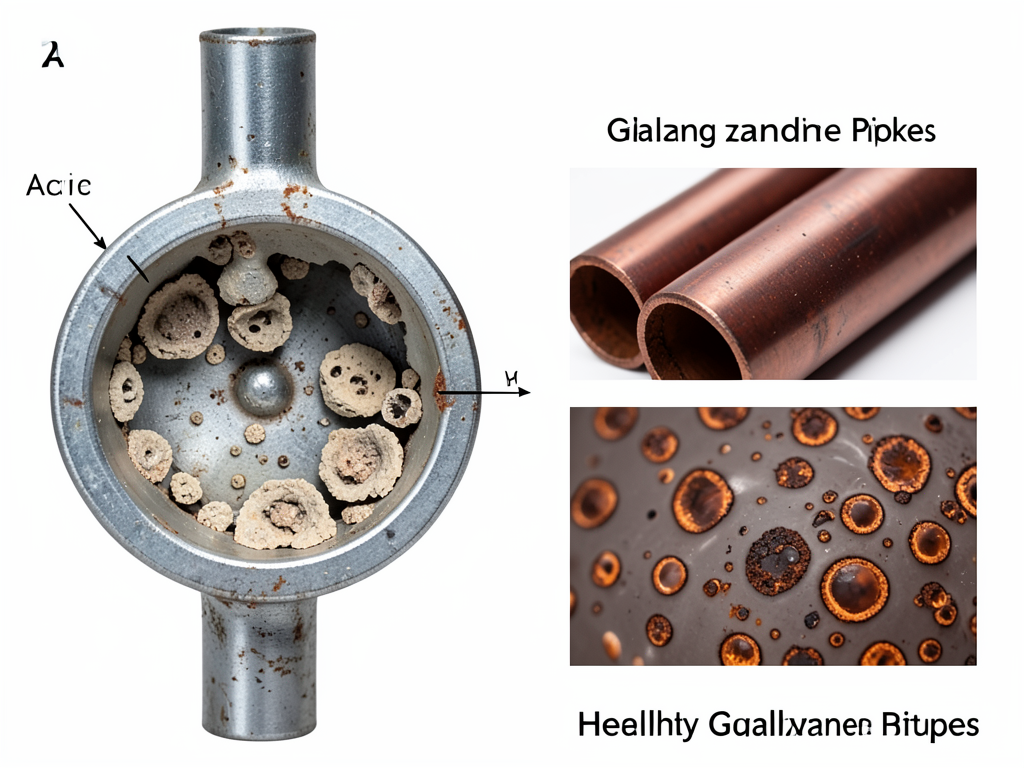
Cross-section diagram showing internal corrosion and tuberculation in aging galvanized pipes compared to healthy copper piping.
Why Galvanized Pipes Fail: The Internal Corrosion Process
The failure mechanism in galvanized pipes is called tuberculation. As the zinc coating wears away, iron particles are exposed to water and oxygen, creating rust. This rust builds up in layers, forming small mounds inside the pipe that look like tiny blisters under a microscope.
These rust mounds create turbulence in the water flow, which causes more corrosion in a vicious cycle. The pipe’s inner diameter shrinks progressively, and the rough surfaces catch more mineral deposits from San Francisco’s hard water, which contains higher levels of calcium and magnesium.
Eventually, the pipe walls become paper-thin. A pressure spike from normal water usage, or even thermal expansion from hot water, can cause the pipe to burst. The San Francisco Public Utilities Commission’s water pressure in some neighborhoods can reach 80-100 PSI, which is enough to rupture severely corroded galvanized pipes.
From Pinholes to Pipe Bursts: How Floods Occur
Galvanized pipe failures typically progress through stages. The first sign is often a pinhole leak small enough to go unnoticed for weeks or months. These slow leaks behind walls create the perfect environment for mold growth, which can begin within 24-48 hours of moisture exposure.
Pinhole leaks in lath and plaster walls common in Ingleside homes are particularly problematic because the water can travel along the wall cavity before emerging, making the source difficult to locate. By the time you see water stains, the damage is already extensive.
The next stage is a larger leak where water flow becomes noticeable but the pipe hasn’t fully failed. This is often when homeowners first realize they have a problem, but the pipe is already severely compromised and may fail completely within days or weeks.
The final stage is catastrophic failure. The pipe bursts completely, releasing pressurized water at full force. In a second-story bathroom, this can flood the entire floor below within minutes, destroying ceilings, walls, flooring, and personal belongings.
Warning Signs Your SF Home is at Risk
Several indicators suggest your Ingleside home may have failing galvanized pipes. Low water pressure throughout the house often indicates internal corrosion is restricting flow. If you notice this in multiple fixtures, especially on upper floors, your pipes are likely deteriorating.
Discolored water, particularly brown or rusty water when you first turn on a tap, indicates rust is breaking loose from pipe walls. This is common in galvanized systems where the internal corrosion is advanced but hasn’t yet caused a leak.
Visible corrosion on exposed pipes in basements or utility areas is another warning sign. Look for flaking, rust spots, or white mineral deposits on the pipe surface. If you can see corrosion externally, the internal condition is likely much worse. How to handle basement flooding in San Francisco after a heavy rainstorm.
Frequent plumbing repairs or recurring leaks in different areas of the home suggest a systemic problem rather than isolated issues. If you’ve had multiple plumbing repairs in the past few years, your galvanized system may be reaching the end of its useful life. EPA information on lead in drinking water.
Health and Financial Risks Beyond Water Damage (Lead and Mold)
Beyond the immediate flood risk, aging galvanized pipes pose serious health concerns. The zinc coating on older galvanized pipes often contained lead, which can leach into your drinking water as the coating deteriorates. San Francisco’s older neighborhoods, including Ingleside, have documented cases of elevated lead levels in homes with original plumbing.
The EPA’s Lead and Copper Rule requires water utilities to monitor for these contaminants, but the responsibility for plumbing inside your home falls to you. If your home was built before 1960 and still has original galvanized pipes, you should have your water tested for lead content.
Mold growth is another significant risk. When galvanized pipes leak slowly behind walls, the moisture creates ideal conditions for mold colonization. Stachybotrys chartarum, commonly known as black mold, thrives in these dark, damp environments and can cause serious respiratory issues.
The financial impact extends beyond water damage restoration. Insurance companies are increasingly denying claims for damage caused by wear and tear of old plumbing systems. If your galvanized pipes fail due to age and deterioration, you may be responsible for both the repair costs and the resulting water damage.
Immediate Steps if Your Galvanized Pipe Leaks or Bursts
If you discover a leaking or burst galvanized pipe, time is critical. The first 30 minutes determine whether you’re dealing with a manageable leak or a full-scale flood. Here’s what to do immediately:
- Shut Off Main Water Valve
Locate your home’s main water shut-off valve immediately. In Ingleside homes, this is often in the basement, garage, or near the front of the house where the water main enters. Turn the valve clockwise until it stops.
- Assess the Damage Scope
Determine if the leak is isolated to one area or if water is spreading through multiple rooms. Check ceilings below bathrooms or kitchens for water accumulation, which indicates the leak has been active for some time.
- Call Emergency Restoration
Professional water damage restoration requires specialized equipment and training. Call (415) 449-6555 for 24/7 emergency response. Every hour of delay increases mold risk and structural damage. Professional sewage cleanup and sanitization for Mission District basements.
- Document for Insurance
Take photos and videos of all damage before any cleanup begins. This documentation is crucial for insurance claims, especially if you’re dealing with an older plumbing system that may be considered wear and tear.
Never attempt to patch galvanized pipes yourself. The threaded connections require specific tools and techniques. A failed DIY repair can cause the pipe to burst completely, turning a small leak into a catastrophic flood.
Preventative Measures and Modern Alternatives for SF Residents
The most effective solution for aging galvanized pipes is complete replacement with modern materials. Copper piping remains the gold standard for durability and longevity, with a lifespan of 50+ years. PEX (cross-linked polyethylene) piping offers flexibility and resistance to San Francisco’s seismic activity, making it increasingly popular for repiping projects.
According to the San Francisco Department of Building Inspection, homes undergoing major renovations or plumbing upgrades must comply with current California Plumbing Code requirements, which no longer permit the installation of new galvanized steel piping for potable water systems.
The repiping process typically involves replacing all visible and accessible pipes, then accessing hidden pipes through walls or ceilings as needed. While this is a significant investment, ranging from $4,000 to $15,000 depending on home size, it eliminates the flood risk and can increase your home’s value.
For homeowners not ready for full repiping, regular plumbing inspections can identify failing sections before they cause damage. A licensed plumber can use video inspection technology to assess pipe condition internally and recommend targeted replacements of the most compromised sections.
Water pressure monitoring is another preventative measure. Installing a pressure-reducing valve can protect your plumbing system from pressure spikes that might cause weakened pipes to burst. The ideal residential water pressure is between 40-60 PSI.
Professional plumber using video inspection camera to assess internal condition of galvanized pipes in a San Francisco basement.
Understanding the Cost-Benefit of Pipe Replacement
The average water damage restoration claim in San Francisco ranges from $10,000 to $50,000, depending on the extent of damage and required remediation. This includes water extraction, structural drying, mold remediation if needed, and reconstruction of damaged areas.
Compare this to the cost of preventative repiping: a whole-house copper repipe typically costs $8,000 to $12,000 for an average Ingleside home. PEX repiping can be slightly less expensive at $6,000 to $10,000 but offers similar protection against catastrophic failure.
The financial calculation becomes clear when you consider that a single major flood can cost more than a complete repiping job. Additionally, modern plumbing materials can improve your home’s water pressure, reduce energy costs for water heating, and eliminate concerns about lead contamination.
Insurance companies are also taking notice. Some providers offer premium discounts for homes with updated plumbing systems, while others may require documentation of plumbing condition before issuing or renewing policies for older homes.
Local Building Codes and San Francisco Requirements
The San Francisco Building Code, aligned with California’s plumbing regulations, specifically addresses the replacement of aging galvanized piping. Section 609.3 of the California Plumbing Code prohibits the use of galvanized steel pipe for new installations of potable water systems.
For homes undergoing significant renovations or additions, the code requires that any exposed galvanized piping be replaced with approved materials. This means that if you’re remodeling your kitchen or bathroom, you may be required to update the plumbing in those areas to meet current standards.
The California Health and Safety Code also mandates lead testing for older plumbing systems, particularly in homes built before 1986 when lead content in plumbing materials was restricted. If lead is detected above actionable levels, the code requires remediation to protect occupants’ health.
San Francisco’s unique seismic requirements add another layer of complexity. Plumbing systems must be properly braced and supported to withstand earthquake forces, which is easier to achieve with modern flexible piping materials than with rigid galvanized steel.
Why Professional Restoration Matters After a Flood
Water damage from failing galvanized pipes requires more than just drying out visible water. Professional restoration follows the IICRC S500 standard for water damage restoration, which categorizes water contamination and dictates specific cleanup procedures. IICRC S500 water damage restoration standard.
Category 1 water from a clean supply line can become Category 2 or 3 water if it sits for more than 48-72 hours, allowing bacteria and mold to multiply. The restoration process must account for this progression and include antimicrobial treatment to prevent health hazards.
Structural drying requires specialized equipment including commercial dehumidifiers, air movers, and moisture meters to detect hidden water in wall cavities and under flooring. Without proper drying, trapped moisture can cause wood rot, drywall deterioration, and persistent mold problems.
Professional restoration companies also handle the insurance claim process, documenting damage, providing detailed estimates, and communicating directly with insurance adjusters. This expertise can mean the difference between a fully covered claim and significant out-of-pocket expenses.
Water damage restoration crew using commercial dehumidifiers and air movers to dry a flooded San Francisco home after galvanized pipe burst.
Taking Action Before Disaster Strikes
If your Ingleside home was built before 1960 and still has its original plumbing, you’re sitting on a potential flood risk. The question isn’t if your galvanized pipes will fail, but when. The cost of preventative replacement is almost always less than the cost of emergency restoration after a catastrophic failure.
Start with a professional plumbing inspection to assess your system’s condition. Look for licensed plumbers who specialize in older San Francisco homes and understand the specific challenges of historic plumbing systems. They can provide a detailed assessment and recommend a replacement strategy that fits your budget and timeline.
Consider the peace of mind that comes with modern plumbing. No more worrying about unexpected floods, no more concerns about lead in your drinking water, and no more fear of waking up to water pouring through your ceiling. That security is worth the investment.
Don’t wait for the first sign of trouble. By then, the damage may already be done. Take control of your home’s plumbing future today and protect your Ingleside home from the flood risks lurking in your walls.
Frequently Asked Questions
How can I tell if my Ingleside home has galvanized pipes?
Galvanized pipes are silver-gray when new but turn dull gray or brownish with age. You can usually identify them by scratching the surface with a screwdriver – if the scratch shows a silver-gray color underneath, it’s likely galvanized steel. Homes built before 1960 in Ingleside almost certainly have galvanized pipes.
What’s the typical lifespan of galvanized pipes in San Francisco?
In San Francisco’s climate and with the city’s hard water, galvanized pipes typically last 40-60 years. Since most Ingleside homes with galvanized pipes were built between 1920-1960, these systems are now at or beyond their expected lifespan and should be considered high-risk for failure.
Will my homeowner’s insurance cover damage from old galvanized pipes?
Insurance coverage varies by policy, but many insurers consider damage from aging plumbing to be wear and tear, which is typically not covered. Some companies may require plumbing inspections for older homes or offer discounts for updated systems. Always check with your insurance provider about specific coverage for galvanized pipe failures.
How long does it take to repipe a home with galvanized pipes?
A complete whole-house repiping typically takes 2-5 days, depending on home size and accessibility. Most of the work can be done with minimal disruption, and water service is usually restored each evening. Professional plumbers can work in phases to minimize inconvenience for occupied homes.
Don’t wait for a flood to take action. Call (415) 449-6555 today to schedule your plumbing inspection and protect your Ingleside home from catastrophic water damage.
{
“@context”: “https://schema.org”,
“@type”: “BlogPosting”,
“headline”: “Why Your Ingleside Home Might Have Galvanized Pipes and Why That Is a Flood Risk”,
“description”: “Discover why aging galvanized pipes in Ingleside homes pose a serious flood risk. Learn warning signs, health hazards, and emergency restoration steps from SF experts.”,
“wordCount”: 2473,
“datePublished”: “2026-03-30T14:46:00.000Z”,
“dateModified”: “2026-03-30T14:46:00.000Z”,
“inLanguage”: “en-US”,
“mainEntityOfPage”: {
“@type”: “WebPage”,
“@id”: “https://summitwaterdamagerestorationsanfrancisco.com”
},
“publisher”: {
“@type”: “LocalBusiness”,
“name”: “Summit Water Damage Restoration San Francisco”,
“url”: “https://summitwaterdamagerestorationsanfrancisco.com”
},
“author”: {
“@type”: “Organization”,
“name”: “Summit Water Damage Restoration San Francisco”,
“url”: “https://summitwaterdamagerestorationsanfrancisco.com”
},
“image”: {
“@type”: “ImageObject”,
“url”: “https://summitwaterdamagerestorationsanfrancisco.com/wp-content/uploads/2026/03/why-your-ingleside-home-might-have-galvanized-pipe-1.png”
}
}
{
“@context”: “https://schema.org”,
“@type”: “LocalBusiness”,
“name”: “Summit Water Damage Restoration San Francisco”,
“url”: “https://summitwaterdamagerestorationsanfrancisco.com”,
“address”: {
“@type”: “PostalAddress”,
“addressLocality”: “San Francisco”
},
“areaServed”: {
“@type”: “City”,
“name”: “San Francisco”
}
}
{
“@context”: “https://schema.org”,
“@type”: “FAQPage”,
“mainEntity”: [
{
“@type”: “Question”,
“name”: “How can I tell if my Ingleside home has galvanized pipes?”,
“acceptedAnswer”: {
“@type”: “Answer”,
“text”: “Galvanized pipes are silver-gray when new but turn dull gray or brownish with age. You can usually identify them by scratching the surface with a screwdriver – if the scratch shows a silver-gray color underneath, it’s likely galvanized steel. Homes built before 1960 in Ingleside almost certainly have galvanized pipes.”
}
},
{
“@type”: “Question”,
“name”: “What’s the typical lifespan of galvanized pipes in San Francisco?”,
“acceptedAnswer”: {
“@type”: “Answer”,
“text”: “In San Francisco’s climate and with the city’s hard water, galvanized pipes typically last 40-60 years. Since most Ingleside homes with galvanized pipes were built between 1920-1960, these systems are now at or beyond their expected lifespan and should be considered high-risk for failure.”
}
},
{
“@type”: “Question”,
“name”: “Will my homeowner’s insurance cover damage from old galvanized pipes?”,
“acceptedAnswer”: {
“@type”: “Answer”,
“text”: “Insurance coverage varies by policy, but many insurers consider damage from aging plumbing to be wear and tear, which is typically not covered. Some companies may require plumbing inspections for older homes or offer discounts for updated systems. Always check with your insurance provider about specific coverage for galvanized pipe failures.”
}
},
{
“@type”: “Question”,
“name”: “How long does it take to repipe a home with galvanized pipes?”,
“acceptedAnswer”: {
“@type”: “Answer”,
“text”: “A complete whole-house repiping typically takes 2-5 days, depending on home size and accessibility. Most of the work can be done with minimal disruption, and water service is usually restored each evening. Professional plumbers can work in phases to minimize inconvenience for occupied homes.”
}
}
]
}
{
“@context”: “https://schema.org”,
“@type”: “HowTo”,
“name”: “Emergency Galvanized Pipe Response”,
“step”: [
{
“@type”: “HowToStep”,
“position”: 1,
“name”: “Shut Off Main Water Valve”,
“text”: “Locate your home’s main water shut-off valve immediately. In Ingleside homes, this is often in the basement, garage, or near the front of the house where the water main enters. Turn the valve clockwise until it stops.”
},
{
“@type”: “HowToStep”,
“position”: 2,
“name”: “Assess the Damage Scope”,
“text”: “Determine if the leak is isolated to one area or if water is spreading through multiple rooms. Check ceilings below bathrooms or kitchens for water accumulation, which indicates the leak has been active for some time.”
},
{
“@type”: “HowToStep”,
“position”: 3,
“name”: “Call Emergency Restoration”,
“text”: “Professional water damage restoration requires specialized equipment and training. Call (415) 449-6555 for 24/7 emergency response. Every hour of delay increases mold risk and structural damage. Professional sewage cleanup and sanitization for Mission District basements.”
},
{
“@type”: “HowToStep”,
“position”: 4,
“name”: “Document for Insurance”,
“text”: “Take photos and videos of all damage before any cleanup begins. This documentation is crucial for insurance claims, especially if you’re dealing with an older plumbing system that may be considered wear and tear.”
}
],
“image”: “https://summitwaterdamagerestorationsanfrancisco.com/wp-content/uploads/2026/03/why-your-ingleside-home-might-have-galvanized-pipe-1.png”
}
{
“@context”: “https://schema.org”,
“@type”: “BreadcrumbList”,
“itemListElement”: [
{
“@type”: “ListItem”,
“position”: 1,
“name”: “Home”,
“item”: “https://summitwaterdamagerestorationsanfrancisco.com”
},
{
“@type”: “ListItem”,
“position”: 2,
“name”: “Blog”,
“item”: “https://summitwaterdamagerestorationsanfrancisco.com/blog”
},
{
“@type”: “ListItem”,
“position”: 3,
“name”: “Why Your Ingleside Home Might Have Galvanized Pipes and Why That Is a Flood Risk”
}
]
}
{
“@context”: “https://schema.org”,
“@type”: “Service”,
“serviceType”: “Water Damage Restoration”,
“provider”: {
“@type”: “LocalBusiness”,
“name”: “Summit Water Damage Restoration San Francisco”,
“url”: “https://summitwaterdamagerestorationsanfrancisco.com”
},
“areaServed”: {
“@type”: “City”,
“name”: “San Francisco”
},
“description”: “Discover why aging galvanized pipes in Ingleside homes pose a serious flood risk. Learn warning signs, health hazards, and emergency restoration steps from SF experts.”
}