
Comparing Injection Drying and Full Replacement for Original Wood Panels in Alamo Square
When water invades the original wood panels in your Alamo Square Victorian, you face a critical decision that affects both your wallet and the historic character of your home. The fog that rolls in from the Pacific and the aging plumbing in these 100-year-old homes create a perfect storm for water damage. This guide breaks down the two main restoration paths so you can make an informed choice before the next storm hits. Who to call for emergency water damage repair in San Francisco right now.
What is Injection Drying for Wood Panels?
Injection drying uses pressurized air to force moisture out of wall cavities and under hardwood floors without removing the finish. Technicians drill small access holes and insert specialized injection drying mats connected to high-pressure air movers. The process pushes dry air through the wood structure, evaporating trapped moisture while preserving the original surface.
The equipment used in Alamo Square homes must account for the thick plaster walls common in Victorian construction. Standard injection systems struggle with the dense lath and plaster assemblies that characterize these buildings. San Francisco’s high coastal humidity also means drying times extend beyond what manufacturers typically estimate, often requiring 4-6 days of continuous treatment instead of the standard 2-3 days. San Francisco Department of Public Health flood response guidelines.
Moisture content readings taken with penetrating meters show the true progress. Surface readings can be misleading in Alamo Square’s older homes where finishes may appear dry while moisture remains trapped in the substrate. Professional restoration teams use multiple meter types to track moisture at different depths throughout the drying process. Fast water restoration services for SoMa businesses and tech offices.
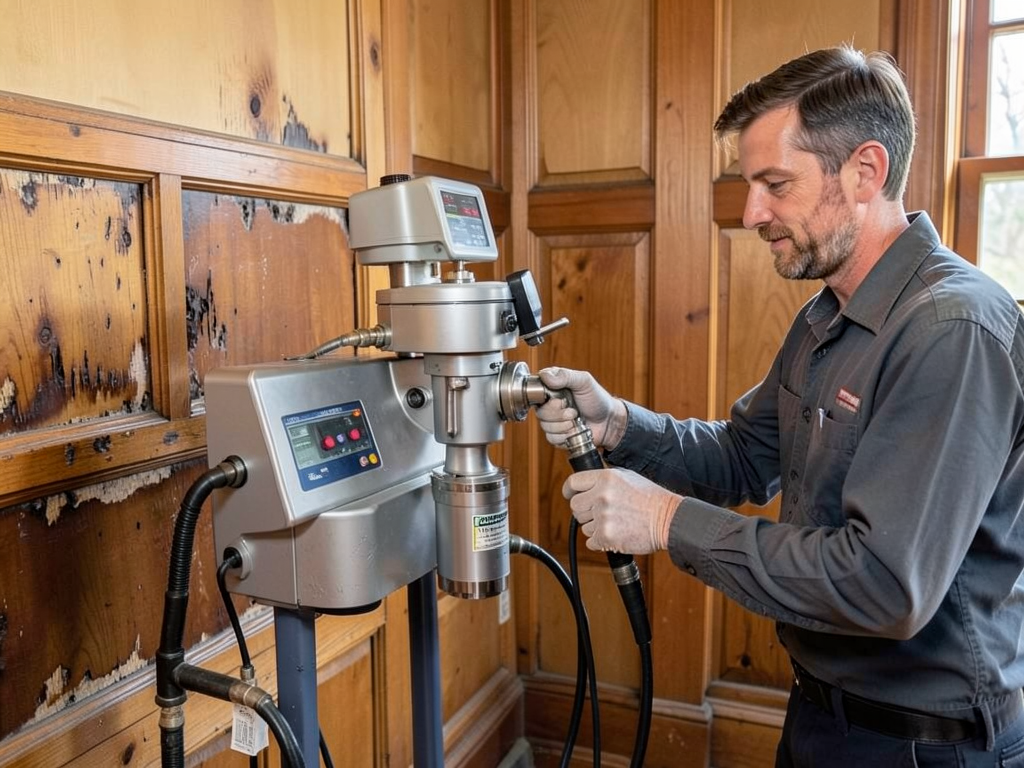
Diagram showing injection drying equipment setup with access holes drilled in historic plaster walls, air injection points, and moisture meter placement for monitoring drying progress in Alamo Square Victorian construction.
When Full Replacement Becomes Necessary
Category 3 water damage from sewage backups or flooding requires complete removal and replacement of affected materials. The San Francisco Department of Public Health mandates this level of remediation to prevent health hazards. Once black water contacts wood panels, the porous nature of the material makes complete sanitization impossible. Professional sewage cleanup and sanitization for Mission District basements.
Structural integrity loss represents another clear replacement threshold. When moisture content exceeds 20% for extended periods, wood begins to lose its load-bearing capacity. The dimensional changes cause permanent warping that injection drying cannot reverse. Testing for structural failure involves checking for deflection under load and measuring dimensional changes across the panel surface.
Mold growth that penetrates beyond surface levels necessitates removal. San Francisco’s building code requires complete material removal when mold colonies extend deeper than 1/4 inch into wood substrates. The coastal climate accelerates mold development, making early detection critical for preservation options.
Cost Comparison for Alamo Square Properties
Injection drying for a typical Alamo Square living room with water-damaged wood paneling costs between $2,800 and $4,200. This includes equipment setup, monitoring, and final moisture verification. The price reflects the specialized knowledge required to work with historic materials and the extended drying times caused by San Francisco’s humidity levels. High-end water damage restoration for historic Pacific Heights estates.
Full replacement of wood panels in the same space ranges from $8,500 to $14,000. This includes demolition, disposal of hazardous materials if mold is present, new material procurement, and installation. Historic homes often require custom-milled wood to match existing profiles, adding significant cost. The San Francisco Building Department requires permits for structural modifications, adding $500 to $800 in permit fees.
Insurance coverage varies significantly between methods. Most policies cover injection drying as a restoration technique but may limit replacement coverage to actual cash value for historic materials. The California Department of Insurance reports that Alamo Square homeowners typically receive 60-70% coverage for replacement work versus 85-95% for restoration methods.
Decision Matrix: Five Factors That Determine Your Path
| Factor | Injection Drying | Full Replacement |
|---|---|---|
| Water Category | Category 1-2 only | Category 3 or mixed |
| Exposure Time | < 72 hours | > 72 hours |
| Material Value | Historic or custom | Standard or replaceable |
| Structural Integrity | Intact | Compromised |
| Timeline | 1-2 weeks | 3-6 weeks |
The water category classification follows IICRC S500 standards. Category 1 water comes from clean sources like broken supply lines. Category 2 includes dishwasher or washing machine overflows with some contamination. Category 3 involves sewage or flooding from rivers and streams. The presence of any Category 3 water automatically eliminates injection drying as an option. IICRC S500 Standard for Professional Water Damage Restoration.
Exposure time affects the feasibility of injection drying. Wood that has been wet for less than 72 hours typically responds well to restoration. Beyond this window, mold begins to establish colonies that compromise the material’s integrity. The San Francisco Bay Area’s mild temperatures and high humidity create conditions where mold can develop within 24-48 hours.
Material value extends beyond monetary worth. Original wood panels in Alamo Square homes often feature quarter-sawn oak or heart pine that is no longer commercially available. The craftsmanship and historical significance add value that replacement cannot match. California Environmental Quality Act considerations may also apply to the disposal of historic materials.
Structural integrity assessment requires professional evaluation. Technicians use deflection testing to measure how much weight the material can support. They also check for dimensional changes using precision calipers. Wood that has swollen more than 3% of its original dimensions typically cannot return to its original shape through drying alone.
Timeline considerations affect both methods differently. Injection drying requires continuous equipment operation and monitoring for 7-10 days. Full replacement involves demolition, material procurement, installation, and finishing work. The San Francisco permitting process can add 2-3 weeks to replacement projects, making injection drying attractive for time-sensitive situations.
Case Study: Successful Injection Drying in Alamo Square
A 1905 Victorian on Hayes Street experienced a supply line break that flooded the formal dining room. The space featured original quarter-sawn white oak wainscoting that had been finished with multiple coats of varnish. Water wicked up the panels for approximately 18 inches from the floor.. Read more about Common Places Water Hides Inside San Francisco Edwardian Homes After a Storm.
Restoration technicians drilled 1/4-inch access holes at the base of each panel section. They inserted injection drying ports and connected the system to commercial-grade air movers. The setup maintained positive pressure of 2-3 PSI throughout the affected area. Daily moisture readings showed progress from 18% moisture content to 12% over seven days.
The project cost $3,200 and preserved the original wood panels. Replacement would have cost approximately $9,800 and required 6-8 weeks for completion. The property owner retained the historic character while avoiding the disruption of major construction work.
This success depended on several factors unique to Alamo Square. The water source was clean supply line water. Exposure time remained under 48 hours. The wood panels showed no signs of structural compromise. The varnish finish helped prevent water penetration beyond the initial damage zone.. Read more about Preventing Secondary Water Damage Like Warping and Buckling in Parnassus Heights Homes.
Technical Considerations for San Francisco’s Climate
San Francisco’s relative humidity levels average 70-80% year-round, compared to the national average of 50-60%. This higher ambient moisture content affects both drying methods. Injection drying requires dehumidification equipment to create the moisture gradient necessary for effective water removal. Without supplemental dehumidification, the process becomes significantly less efficient.
The city’s building code requirements for historic preservation influence restoration decisions. The San Francisco Planning Department’s preservation guidelines encourage retention of original materials when feasible. This regulatory framework favors injection drying for qualifying water damage scenarios.
Seismic considerations affect both methods. Injection drying maintains the original attachment methods and structural connections. Replacement work must comply with current seismic retrofit requirements, which may involve additional reinforcement of wall assemblies. The California Building Code Section 1613.8 specifies requirements for historic buildings undergoing modification.
Environmental factors play a role in method selection. Injection drying produces minimal waste and avoids the environmental impact of manufacturing and transporting new materials. The Bay Area Air Quality Management District has documented that construction demolition and replacement activities contribute significantly to local air pollution and landfill volume.
Insurance and Documentation Requirements
Insurance companies require specific documentation for both restoration methods. For injection drying, daily moisture mapping reports demonstrate the progress of water removal. These reports include readings from multiple locations and depths, showing the reduction in moisture content over time. The documentation must follow IICRC S500 standards for professional water damage restoration.
Replacement projects require detailed scope documentation showing the extent of damage and the necessity of removal. Insurance adjusters look for evidence of structural compromise, mold growth beyond surface levels, or Category 3 water contamination. The documentation must justify why restoration is not feasible.
Alamo Square homeowners should review their insurance policies before making decisions. Some policies have specific exclusions for historic materials or limitations on replacement coverage. The California Department of Insurance provides consumer guides that explain common policy provisions and coverage limitations for water damage restoration.
Professional restoration companies maintain certification through the IICRC and follow industry-standard protocols. This certification provides assurance that the work meets established quality standards and complies with local regulations. The certification process includes training on historic building materials and appropriate restoration techniques.
Making the Final Decision
The choice between injection drying and full replacement depends on your specific situation. Start with a professional assessment that includes moisture mapping, structural evaluation, and water category determination. This assessment provides the data needed to make an informed decision.
Consider your timeline requirements. Injection drying typically takes 1-2 weeks from start to finish. Replacement projects often extend to 4-6 weeks when permitting and material procurement are included. The urgency of your situation may influence the decision.
Evaluate the historic value of your wood panels. Original materials in Alamo Square homes often feature craftsmanship and wood species that are no longer available. The loss of these materials represents an irreversible change to your home’s character.
Review your insurance coverage and understand the financial implications of each method. While injection drying typically costs less, insurance coverage may vary based on your specific policy provisions and the nature of the damage.
Consult with professionals who have experience with historic San Francisco homes. The unique construction methods and materials used in Alamo Square require specialized knowledge that general contractors may not possess.
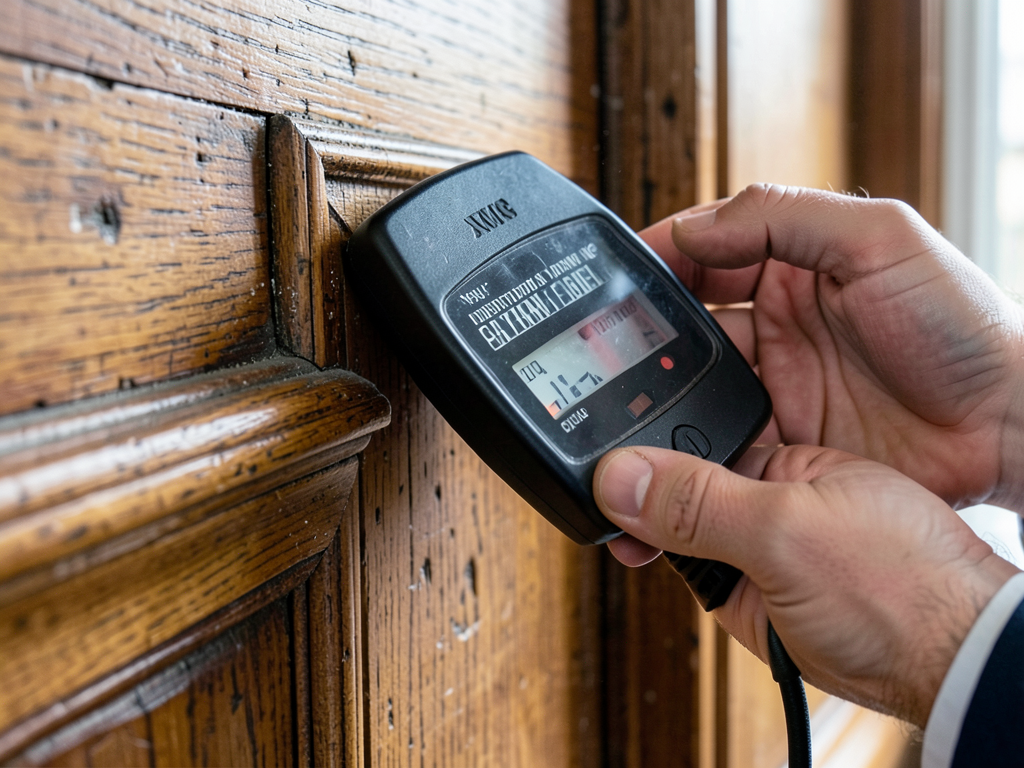
Technician using moisture meter on historic wood panel in Alamo Square Victorian, showing the diagnostic process for determining whether injection drying or replacement is appropriate for water-damaged original materials.
Preventing Future Water Damage
Prevention strategies can help avoid the difficult choice between injection drying and replacement. Regular inspection of plumbing supply lines, especially in homes over 50 years old, can identify potential failure points before they cause damage. The galvanized pipes common in Alamo Square’s older homes become brittle with age and develop pinhole leaks.
Install water detection systems that can shut off supply lines automatically when leaks are detected. These systems provide early warning and can prevent extensive damage by stopping water flow within seconds of a break. Many systems integrate with smartphone apps for remote monitoring.
Maintain proper drainage around your foundation to prevent water intrusion during heavy rains. San Francisco’s combined sewer system can become overwhelmed during atmospheric river events, causing backups that affect basement and first-floor levels. Proper grading and drainage systems help direct water away from vulnerable areas. How to handle basement flooding in San Francisco after a heavy rainstorm.
Schedule annual roof inspections to identify potential leak sources before they cause interior damage. The combination of San Francisco’s fog and occasional heavy rains creates conditions where small roof defects can lead to significant interior water damage over time.
Before and after comparison showing injection drying equipment setup in historic Alamo Square home, demonstrating how original wood panels can be preserved through professional restoration techniques.
Frequently Asked Questions
How long does injection drying take compared to replacement?
Injection drying typically requires 7-10 days of equipment operation and monitoring. Full replacement usually takes 4-6 weeks when including demolition, material procurement, installation, and finishing work. The permitting process in San Francisco can add additional time to replacement projects.
Will my insurance cover injection drying for historic wood panels?
Most insurance policies cover injection drying as a restoration technique. Coverage for replacement of historic materials varies significantly between policies. Many insurers limit replacement coverage to actual cash value rather than replacement cost for historic materials. Review your specific policy provisions or consult with your insurance agent.
Can I perform injection drying myself to save money?
Professional injection drying requires specialized equipment, technical knowledge, and certification. Improper technique can lead to incomplete drying, mold growth, or structural damage. The IICRC S500 standards require specific protocols for water damage restoration that trained professionals follow to ensure proper results.
What happens if injection drying doesn’t work?
If moisture content readings show that injection drying is not achieving the target levels, technicians will recommend alternative approaches. This may include targeted removal of the most affected sections while preserving undamaged areas, or complete replacement if the damage is too extensive. The decision depends on the specific conditions found during the drying process.
How can I tell if my wood panels are structurally compromised?
Structural compromise signs include visible warping, cracking sounds when pressure is applied, or deflection under normal weight loads. Professional assessment using deflection testing and moisture content measurements provides definitive answers. Wood that has swelled more than 3% of its original dimensions typically cannot return to its original shape through drying alone.
Call (415) 449-6555 today to schedule your inspection. Our certified technicians can assess your water damage and recommend the most appropriate restoration method for your Alamo Square home. Don’t wait until mold develops or structural damage worsens. Pick up the phone and call (415) 449-6555 before the next storm hits.
Early intervention can mean the difference between preserving your home’s historic character and facing a costly full replacement. Our team understands the unique challenges of restoring water-damaged wood panels in San Francisco’s historic neighborhoods. We provide honest assessments and clear recommendations based on your specific situation.. Read more about Waterproofing Challenges for Mid Century Modern Homes in Diamond Heights.
Whether you need immediate emergency response or want to understand your options for existing water damage, we’re here to help. Call (415) 449-6555 now to speak with a water damage restoration specialist who knows Alamo Square inside and out.
You may also find this helpful. Can Eco Friendly Bamboo or Cork Flooring Be Saved After a Major Water Leak?.
You may also find this helpful. Saving Expensive Marble and Stone Surfaces After a Leak in Your Presidio Terrace Estate.
You may also find this helpful. Can Your Antique Furniture Be Saved After a Flood? What Japantown Residents Need to Know.
You may also find this helpful. Understanding the Speed Benefits of Structural Heat Drying for a Rapid Recovery.
{
“@context”: “https://schema.org”,
“@type”: “BlogPosting”,
“headline”: “Comparing Injection Drying and Full Replacement for Original Wood Panels in Alamo Square”,
“description”: “Alamo Square homeowners face a critical choice: injection drying or full replacement for water-damaged wood panels. Discover the cost, timeline, and preservation factors that matter most in San Francisco’s historic neighborhoods.”,
“wordCount”: 2368,
“datePublished”: “2026-06-09T11:58:00.000Z”,
“dateModified”: “2026-06-09T11:58:00.000Z”,
“inLanguage”: “en-US”,
“mainEntityOfPage”: {
“@type”: “WebPage”,
“@id”: “https://summitwaterdamagerestorationsanfrancisco.com”
},
“publisher”: {
“@type”: “LocalBusiness”,
“name”: “Summit Water Damage Restoration San Francisco”,
“url”: “https://summitwaterdamagerestorationsanfrancisco.com”
},
“author”: {
“@type”: “Organization”,
“name”: “Summit Water Damage Restoration San Francisco”,
“url”: “https://summitwaterdamagerestorationsanfrancisco.com”
},
“image”: {
“@type”: “ImageObject”,
“url”: “https://summitwaterdamagerestorationsanfrancisco.com/wp-content/uploads/2026/03/comparing-injection-drying-and-full-replacement-fo-1.png”
}
}
{
“@context”: “https://schema.org”,
“@type”: “LocalBusiness”,
“name”: “Summit Water Damage Restoration San Francisco”,
“url”: “https://summitwaterdamagerestorationsanfrancisco.com”,
“address”: {
“@type”: “PostalAddress”,
“addressLocality”: “San Francisco”
},
“areaServed”: {
“@type”: “City”,
“name”: “San Francisco”
}
}
{
“@context”: “https://schema.org”,
“@type”: “FAQPage”,
“mainEntity”: [
{
“@type”: “Question”,
“name”: “What is Injection Drying for Wood Panels?”,
“acceptedAnswer”: {
“@type”: “Answer”,
“text”: “Injection drying uses pressurized air to force moisture out of wall cavities and under hardwood floors without removing the finish. Technicians drill small access holes and insert specialized injection drying mats connected to high-pressure air movers. The process pushes dry air through the wood structure, evaporating trapped moisture while preserving the original surface.”
}
},
{
“@type”: “Question”,
“name”: “How long does injection drying take compared to replacement?”,
“acceptedAnswer”: {
“@type”: “Answer”,
“text”: “Injection drying typically requires 7-10 days of equipment operation and monitoring. Full replacement usually takes 4-6 weeks when including demolition, material procurement, installation, and finishing work. The permitting process in San Francisco can add additional time to replacement projects.”
}
},
{
“@type”: “Question”,
“name”: “Will my insurance cover injection drying for historic wood panels?”,
“acceptedAnswer”: {
“@type”: “Answer”,
“text”: “Most insurance policies cover injection drying as a restoration technique. Coverage for replacement of historic materials varies significantly between policies. Many insurers limit replacement coverage to actual cash value rather than replacement cost for historic materials. Review your specific policy provisions or consult with your insurance agent.”
}
},
{
“@type”: “Question”,
“name”: “Can I perform injection drying myself to save money?”,
“acceptedAnswer”: {
“@type”: “Answer”,
“text”: “Professional injection drying requires specialized equipment, technical knowledge, and certification. Improper technique can lead to incomplete drying, mold growth, or structural damage. The IICRC S500 standards require specific protocols for water damage restoration that trained professionals follow to ensure proper results.”
}
},
{
“@type”: “Question”,
“name”: “What happens if injection drying doesn’t work?”,
“acceptedAnswer”: {
“@type”: “Answer”,
“text”: “If moisture content readings show that injection drying is not achieving the target levels, technicians will recommend alternative approaches. This may include targeted removal of the most affected sections while preserving undamaged areas, or complete replacement if the damage is too extensive. The decision depends on the specific conditions found during the drying process.”
}
},
{
“@type”: “Question”,
“name”: “How can I tell if my wood panels are structurally compromised?”,
“acceptedAnswer”: {
“@type”: “Answer”,
“text”: “Structural compromise signs include visible warping, cracking sounds when pressure is applied, or deflection under normal weight loads. Professional assessment using deflection testing and moisture content measurements provides definitive answers. Wood that has swelled more than 3% of its original dimensions typically cannot return to its original shape through drying alone.”
}
}
]
}
{
“@context”: “https://schema.org”,
“@type”: “BreadcrumbList”,
“itemListElement”: [
{
“@type”: “ListItem”,
“position”: 1,
“name”: “Home”,
“item”: “https://summitwaterdamagerestorationsanfrancisco.com”
},
{
“@type”: “ListItem”,
“position”: 2,
“name”: “Blog”,
“item”: “https://summitwaterdamagerestorationsanfrancisco.com/blog”
},
{
“@type”: “ListItem”,
“position”: 3,
“name”: “Comparing Injection Drying and Full Replacement for Original Wood Panels in Alamo Square”
}
]
}
{
“@context”: “https://schema.org”,
“@type”: “Service”,
“serviceType”: “Water Damage Restoration”,
“provider”: {
“@type”: “LocalBusiness”,
“name”: “Summit Water Damage Restoration San Francisco”,
“url”: “https://summitwaterdamagerestorationsanfrancisco.com”
},
“areaServed”: {
“@type”: “City”,
“name”: “San Francisco”
},
“description”: “Alamo Square homeowners face a critical choice: injection drying or full replacement for water-damaged wood panels. Discover the cost, timeline, and preservation factors that matter most in San Francisco’s historic neighborhoods.”
}