
How to Tell if Your Historic Castro Stucco Is Hiding a Deep Water Intrusion Issue
Living in a historic Castro home means dealing with beautiful architecture and aging building materials that weren’t designed for today’s moisture challenges. Stucco that looked perfect for decades can suddenly develop hidden water intrusion problems that threaten your home’s structural integrity. Who to call for emergency water damage repair in San Francisco right now.
Water intrusion in stucco occurs when moisture penetrates through tiny cracks, failed flashing, or deteriorated sealants and gets trapped behind the exterior surface. In San Francisco’s marine climate, this trapped moisture creates the perfect conditions for mold growth, wood rot, and structural damage that often goes unnoticed until major repairs are needed. EPA mold information.
The first signs of stucco water intrusion often appear as subtle changes in appearance or performance. Learning to recognize these warning signals can save you thousands in repair costs and prevent serious health hazards from mold contamination. Fast water restoration services for SoMa businesses and tech offices.
Understanding how water moves through building materials is crucial for identifying problems early. Moisture follows the path of least resistance, entering through even microscopic openings and traveling through capillary action. Once behind your stucco, it can travel horizontally for several feet before showing visible signs on the interior walls. High-end water damage restoration for historic Pacific Heights estates.
San Francisco’s unique climate creates additional challenges for stucco homes. The combination of coastal fog, occasional heavy rains, and temperature fluctuations causes stucco to expand and contract more than in other regions. This constant movement creates hairline cracks that widen over time, providing entry points for moisture.. Read more about How San Francisco Summer Fog Can Cause More Water Damage Than Winter Rain.
Historic homes in the Castro neighborhood face particular risks due to their age and construction methods. Many were built before modern building codes required proper waterproofing membranes or weep screeds at the base of walls. These older homes often lack the protective barriers that newer construction includes.. Read more about Why Lone Mountain Homes Often Experience Mystery Moisture in the Garage.
Before we dive into specific warning signs, it’s important to understand that water intrusion isn’t always visible from the outside. Many serious problems develop slowly over years, with damage occurring behind walls before any surface symptoms appear. This makes early detection and professional inspection critical for historic properties. Professional sewage cleanup and sanitization for Mission District basements.
Visual Signs of Stucco Water Damage
The most obvious indicators of water intrusion often show up as changes in your stucco’s appearance. These visual cues can range from subtle discoloration to dramatic physical changes in the stucco surface.
Efflorescence appears as white, chalky deposits on stucco surfaces. This occurs when water carries dissolved salts from within the wall to the surface, where they crystallize as the moisture evaporates. While efflorescence itself isn’t harmful, it indicates that water is moving through your walls.. Read more about Why a Professional Moisture Survey Is Essential Before Selling Your San Francisco Property.
Staining patterns can reveal the source and extent of water intrusion. Dark streaks running down walls often indicate roof leaks or failed flashing. Circular or irregular stains typically suggest water pooling and then draining through the wall assembly.
Cracking patterns provide important diagnostic information. Hairline cracks less than 1/8 inch wide are common in aging stucco and usually don’t indicate serious problems. However, wider cracks or those that show signs of active movement warrant immediate attention.
Bulging or blistering in stucco surfaces suggests water is trapped behind the finish coat. As moisture builds up, it creates pressure that pushes the stucco outward, creating visible deformations. This often indicates a failed waterproofing membrane or missing weep screed.
Delamination occurs when the stucco finish separates from the substrate beneath. You might notice sections of stucco that sound hollow when tapped or that can be easily pried away from the wall. This separation creates channels for water to enter and become trapped.
Peeling paint or failing sealants around windows and doors often indicates water intrusion. When moisture gets behind paint or caulk, it causes these protective layers to lose adhesion and fail prematurely.
Window sill damage is particularly common in Castro’s historic homes. The combination of age, salt air corrosion, and water exposure often leads to deterioration of window frames and surrounding stucco, creating perfect entry points for moisture.
Call (415) 449-6555 today to schedule your stucco inspection before minor issues become major structural problems.
Interior Warning Signs
Water that penetrates stucco often travels to interior spaces before becoming visible on exterior surfaces. These interior signs can appear far from the actual entry point, making diagnosis challenging without professional tools.. Read more about How Improper Deck Drainage Can Rot the Exterior Walls of Your Twin Peaks Home.
Musty odors in specific rooms or areas of your home often indicate hidden moisture problems. These smells develop when water creates conditions for mold and mildew growth within wall cavities or under flooring.
Water stains on interior walls or ceilings can appear anywhere water travels through your home’s structure. These stains might show up directly opposite exterior stucco walls or in completely different areas where water has traveled through framing.
Peeling or bubbling paint on interior walls suggests moisture is present within the wall assembly. When water vapor moves through walls, it can cause paint to lose adhesion and form bubbles or peel away from the surface.
Soft or spongy drywall indicates severe moisture damage. When drywall becomes saturated, it loses structural integrity and feels soft to the touch. This often occurs near floor level where water accumulates.
Crown molding or baseboard separation from walls can signal moisture expansion within wall cavities. As wood absorbs water, it swells, causing trim pieces to push away from their mounting surfaces.
Electrical outlet problems near exterior walls sometimes indicate water intrusion. Moisture can cause corrosion in electrical connections or create short circuits when it reaches wiring within wall cavities.
Floor covering failures near exterior walls often result from water wicking up from below. Hardwood floors might cup or buckle, while carpeting can develop mold or delaminate from its backing.
Door and window operation problems can indicate moisture-related swelling of framing members. Doors that suddenly stick or windows that become difficult to operate might be responding to moisture changes in surrounding materials.
San Francisco-Specific Environmental Factors
Castro’s coastal location creates unique challenges for stucco maintenance. The combination of marine layer moisture, salt air, and occasional heavy rains accelerates the deterioration of building materials compared to inland areas.
Marine layer moisture creates constant dampness that keeps stucco surfaces wet for extended periods. This persistent moisture prevents proper drying and creates conditions for accelerated deterioration of both the stucco finish and underlying materials.
Salt air corrosion affects metal components in stucco systems, including lath, fasteners, and corner beads. As these metal elements corrode, they lose structural integrity and create pathways for water entry.
Seismic activity common to the Bay Area causes micro-movement in building structures. Even small ground movements can create hairline cracks in stucco that widen over time, providing entry points for moisture.
Temperature fluctuations between San Francisco’s cool, foggy mornings and warmer afternoons cause stucco to expand and contract. This movement creates stress points that eventually lead to cracking and separation.
Combined sewer overflow during heavy rains can back up into basement areas, creating hydrostatic pressure against foundation walls. This pressure forces moisture through even tiny cracks in stucco or foundation materials. How to handle basement flooding in San Francisco after a heavy rainstorm.
Air quality in urban areas contains pollutants that can accelerate stucco deterioration. Sulfur compounds and other airborne chemicals can react with stucco materials, making them more susceptible to moisture damage.
Vegetation near buildings creates additional moisture challenges. Plants that grow against stucco walls trap moisture against the surface and can force roots into small cracks, widening them over time.
Improper drainage around historic homes often compounds moisture problems. Many older properties lack proper grading or gutter systems, allowing water to pool near foundation walls where it can penetrate stucco.
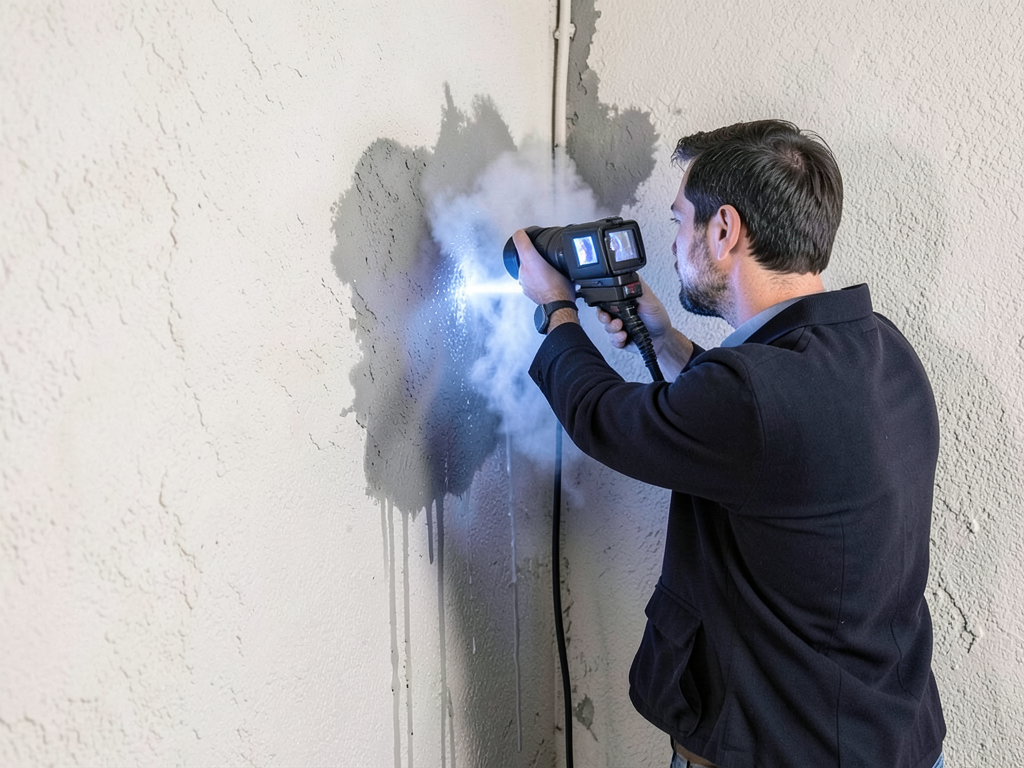
<img decoding="async" alt="Professional using thermal imaging camera to detect water intrusion behind stucco walls" src="
” />
Professional Diagnostic Technology
Modern moisture detection technology allows professionals to find hidden water intrusion without destructive testing. These tools can identify problem areas before visible damage appears, saving homeowners significant repair costs.
Thermal imaging cameras detect temperature differences caused by moisture presence. Wet materials conduct heat differently than dry materials, creating thermal patterns that reveal hidden water intrusion behind walls and under surfaces.
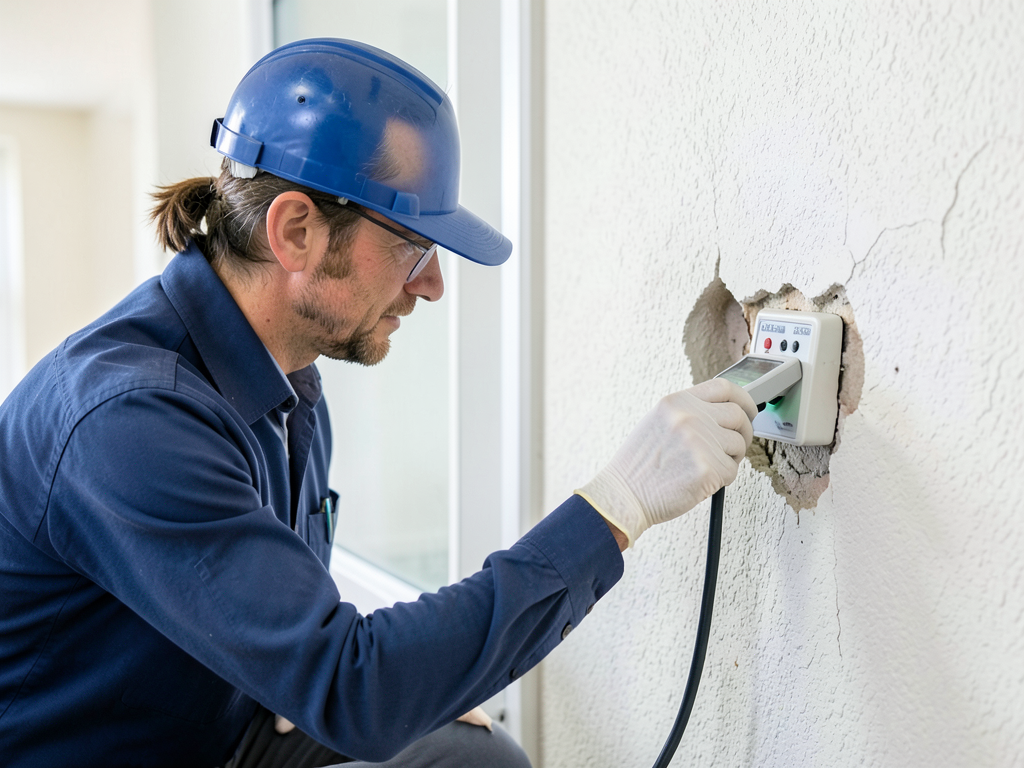
Moisture meters measure the electrical conductivity of materials, which increases with moisture content. These devices can detect elevated moisture levels through various depths of building materials, helping pinpoint water intrusion sources.
Infrared thermography creates detailed maps of temperature variations across wall surfaces. These maps can reveal areas where moisture is affecting thermal performance, even when no visible signs are present.
Boroscope inspection involves inserting a small camera through tiny access holes to view interior wall cavities. This technology allows direct visual confirmation of moisture damage, mold growth, and structural deterioration.
Capacitance-based moisture sensors provide non-invasive testing of wall assemblies. These sensors can detect moisture content through several inches of material without requiring physical penetration of the surface.
Relative humidity testing in wall cavities helps identify areas where moisture levels exceed safe thresholds. Elevated humidity within wall spaces often indicates ongoing water intrusion problems.
Pressure testing of building envelopes can identify air leaks that also serve as water entry points. This testing helps locate areas where building envelope integrity has been compromised.
Acoustic detection equipment can sometimes hear the sound of active water leaks within wall cavities. This technology is particularly useful for identifying plumbing leaks that might be contributing to stucco water intrusion.
Moisture mapping creates comprehensive documentation of water intrusion patterns throughout a structure. This mapping helps develop targeted repair strategies and verify the effectiveness of remediation efforts.
The Restoration Process
When water intrusion is confirmed, proper restoration requires a systematic approach that addresses both visible damage and underlying moisture problems. Rushing repairs without addressing root causes often leads to recurring issues.
Initial assessment involves comprehensive moisture mapping and damage evaluation. This step determines the extent of intrusion, identifies all affected areas, and develops a restoration plan that addresses both symptoms and causes.
Containment procedures protect unaffected areas during restoration work. This includes establishing negative air pressure zones, using HEPA filtration, and implementing proper containment barriers to prevent cross-contamination.
Moisture removal begins with addressing active water sources. This might involve repairing roof leaks, fixing plumbing problems, improving drainage, or addressing foundation issues that allow water entry.
Drying procedures use commercial-grade equipment to remove moisture from building materials. This process often takes several days and requires monitoring to ensure complete moisture removal before repairs begin.
Mold remediation becomes necessary when water intrusion has created conditions for fungal growth. This process follows IICRC S520 standards and involves removing contaminated materials, cleaning affected surfaces, and applying antimicrobial treatments.
Structural repairs address damage to framing, sheathing, and other building components. This often involves removing damaged materials and replacing them with properly treated materials that resist future moisture problems.
Stucco repair requires matching the original finish texture and color while incorporating modern waterproofing techniques. This includes installing proper weep screeds, applying moisture barriers, and using flexible sealants at movement joints.
Final testing verifies that moisture levels have returned to acceptable ranges and that repairs have addressed all identified problems. This testing provides documentation for insurance purposes and ensures the effectiveness of restoration work.
Preventative measures help protect against future water intrusion. This might include improving exterior drainage, installing proper flashing, applying water-repellent sealers, or upgrading building envelope components.
When to Call a Professional
Recognizing when DIY inspection isn’t sufficient can prevent costly mistakes and ensure proper remediation of water intrusion problems. Some situations clearly indicate the need for professional assessment and repair.
Multiple warning signs appearing simultaneously suggest widespread problems that require comprehensive evaluation. When you notice several indicators of water intrusion, professional assessment can identify all affected areas and develop an effective repair strategy.
Suspected structural damage warrants immediate professional attention. Signs like sagging floors, cracking foundations, or significant wall movement indicate problems that could compromise building safety if not properly addressed.
Mold growth visible on interior surfaces or suspected within wall cavities requires professional remediation. Mold can cause serious health problems and often indicates extensive moisture problems that need expert evaluation.
Historic property considerations make professional involvement essential. Older homes often contain hazardous materials like lead paint or asbestos, and their unique construction methods require specialized knowledge for proper repair.
Insurance claim preparation benefits from professional documentation. Detailed assessment reports, moisture mapping, and repair documentation help ensure proper insurance coverage for water damage restoration.
Recurring problems despite previous repairs indicate underlying issues weren’t properly addressed. Professional evaluation can identify root causes and develop solutions that prevent future water intrusion.
Time-sensitive situations require prompt professional response. Active water intrusion, visible mold growth, or structural concerns need immediate attention to prevent further damage and protect occupant health.
Complex building systems integration means water intrusion often affects multiple building components. Professional assessment can identify how problems in one area might be affecting others and develop comprehensive repair strategies.
<img decoding="async" alt="Technician using moisture meter to test stucco for hidden water damage" src="
” />
Prevention and Maintenance
Regular maintenance can prevent many water intrusion problems before they start. A proactive approach to stucco care helps protect your investment and avoid costly emergency repairs.
Annual visual inspections should check for new cracks, staining, or other signs of deterioration. Early detection allows for simple repairs before minor issues become major problems requiring extensive restoration.
Sealant maintenance around windows, doors, and other penetrations prevents water entry through these common failure points. Replacing deteriorated caulk and ensuring proper flashing installation protects vulnerable areas.
Drainage system maintenance ensures water moves away from your home rather than toward it. Clean gutters, properly functioning downspouts, and correct grading prevent water from pooling near foundation walls.
Roof inspection and maintenance prevent water from entering through the top of your home. Damaged shingles, deteriorated flashing, or clogged valleys can direct water toward stucco walls where it can cause damage.
Landscape management keeps vegetation from damaging stucco surfaces. Trim plants away from walls, ensure proper drainage away from the foundation, and avoid planting trees with invasive root systems near your home.
Professional cleaning of stucco surfaces removes dirt, algae, and other materials that can trap moisture against the surface. This cleaning should use appropriate methods that don’t damage the stucco finish.
Water repellent application can provide additional protection for aging stucco. These treatments help water bead and run off rather than penetrating the surface, though they should be selected carefully to avoid trapping moisture inside walls.
Monitoring indoor humidity levels helps identify moisture problems early. Excessive indoor humidity can indicate ventilation problems or moisture intrusion that needs attention before causing damage.
Professional assessment every few years provides expert evaluation of your home’s condition. These assessments can identify developing problems before they become visible and recommend preventative maintenance strategies.
Cost Considerations
Understanding the potential costs of water intrusion helps homeowners make informed decisions about maintenance and repairs. Early intervention almost always costs less than addressing extensive damage.
Inspection costs vary based on the scope of assessment needed. Basic visual inspections might cost a few hundred dollars, while comprehensive moisture mapping with thermal imaging can cost significantly more but provide valuable diagnostic information.
Minor repairs like sealing small cracks or replacing damaged caulk typically cost less than $500. These preventative measures can prevent much more expensive problems from developing.
Moderate repairs involving localized stucco replacement or flashing repair might cost $1,000 to $5,000 depending on the extent of damage and accessibility of affected areas.
Major restoration projects involving extensive water damage can cost $10,000 to $50,000 or more. These projects often require removing and replacing large sections of stucco, repairing structural damage, and addressing underlying moisture problems.
Mold remediation costs depend on the extent of contamination and the area affected. Small areas might cost a few hundred dollars to clean, while whole-house contamination can cost tens of thousands for proper remediation.
Preventative maintenance costs are relatively low compared to repair costs. Annual inspections, routine sealant replacement, and minor repairs typically cost a few hundred dollars per year.
Insurance considerations affect out-of-pocket costs for water damage. Many policies cover sudden damage but exclude long-term moisture problems, making preventative maintenance particularly important for historic properties.
Value preservation through proper maintenance helps protect your home’s market value. Well-maintained historic properties often command premium prices, while properties with water damage history may face valuation challenges.
Energy efficiency improvements often accompany water intrusion repairs. Addressing moisture problems frequently involves upgrading insulation and air sealing, which can reduce heating and cooling costs.
Building Code Compliance
Water intrusion repairs must comply with current building codes, which often differ significantly from original construction standards. Understanding these requirements helps ensure proper repairs and avoid code violations.
California Building Code Section 1808.10 requires proper weep screed installation at the base of exterior plaster walls. Many historic homes lack this critical component, which allows trapped moisture to escape rather than causing damage. California Building Code.
San Francisco Building Code Appendix Chapter 7A addresses fire-resistant construction requirements for exterior walls. Repairs must maintain or improve upon original fire-resistance ratings while addressing moisture concerns.
Title 24 energy efficiency standards affect repair materials and methods. Modern building codes often require additional insulation or air sealing when exterior walls are repaired or replaced.
Permit requirements vary based on the extent of repairs. Minor cosmetic repairs might not require permits, while structural repairs or modifications to exterior walls typically require proper permitting and inspection.
Historical preservation guidelines may apply to repairs on designated historic properties. These guidelines often require maintaining original appearance while incorporating modern moisture protection techniques behind the scenes.
Accessibility requirements might affect repair approaches for multi-story buildings. Proper staging, scaffolding, and worker safety measures must be incorporated into repair plans.
Environmental regulations govern disposal of damaged materials, particularly if they contain hazardous substances like lead paint or asbestos. Proper handling and disposal are required by law.
Contractor licensing requirements ensure repairs are performed by qualified professionals. California requires specific licenses for various types of construction work, including stucco repair and water damage restoration.
Insurance company requirements may exceed building code minimums. Some insurers require specific repair methods or documentation to maintain coverage for future water damage claims.
Frequently Asked Questions
How can I tell if my stucco has water damage if I don’t see any visible signs?
Hidden water damage often reveals itself through musty odors, increased humidity in certain rooms, or unexplained increases in your water bill. Professional moisture testing using thermal imaging or moisture meters can detect problems before visible signs appear.
How much does professional stucco water damage inspection cost in San Francisco?
Professional inspections typically range from $300 to $800 depending on the size of your home and the extent of testing required. Comprehensive assessments with thermal imaging and moisture mapping cost more but provide detailed diagnostic information.
Can I repair minor stucco cracks myself, or should I always call a professional?
Small hairline cracks less than 1/8 inch wide can often be repaired with elastomeric caulk as a temporary measure. However, if cracks are widening, show signs of active movement, or you notice other warning signs, professional assessment is recommended.
How long does stucco water damage restoration typically take?
The restoration timeline varies based on damage extent. Minor repairs might take a few days, while major restoration projects involving structural repairs and mold remediation can take several weeks. The drying process alone often requires 3-7 days before repairs can begin.
Will my homeowner’s insurance cover stucco water damage repairs?
Coverage depends on your specific policy and the cause of damage. Sudden events like plumbing failures are often covered, while long-term moisture problems due to maintenance issues may be excluded. Review your policy and consult with your insurance provider for specific coverage details.
What’s the difference between normal stucco aging and serious water damage?
Normal aging includes fine hairline cracks and minor discoloration that don’t worsen over time. Serious water damage shows progressive deterioration, active moisture presence, structural changes, or signs of mold growth. When in doubt, professional assessment can distinguish between the two.
How can I prevent water damage to my historic stucco in the Castro?
Regular maintenance is key: inspect annually for cracks, maintain sealants around windows and doors, ensure proper drainage away from your foundation, clean gutters regularly, and address any signs of moisture problems promptly. Professional assessment every few years can catch developing issues early.
Don’t wait until water damage becomes a major structural problem. Call (415) 449-6555 now for professional stucco inspection and water damage assessment. Early detection can save you thousands in repair costs and protect your home’s value.
What should I do if I discover water damage during a DIY inspection?
If you find signs of water damage, stop any further investigation that might spread contamination, document what you’ve found with photos, and contact a professional water damage restoration company immediately. Avoid disturbing affected areas, as this can release mold spores or cause further damage.
How does San Francisco’s climate specifically affect stucco maintenance needs?
San Francisco’s marine climate creates constant moisture exposure through fog and high humidity, accelerates salt air corrosion of metal components, and causes more frequent thermal expansion and contraction of stucco materials. These factors mean stucco in Castro typically requires more frequent maintenance than in drier climates.
What are the health risks associated with hidden water damage in stucco?
Hidden moisture creates ideal conditions for mold growth, which can cause respiratory problems, allergic reactions, and other health issues. Some molds produce mycotoxins that can be particularly harmful. Additionally, moisture-damaged building materials can harbor bacteria and other pathogens that affect indoor air quality.
How do I choose a qualified professional for stucco water damage assessment?
Look for contractors with specific experience in historic home restoration, proper licensing and insurance, certifications from organizations like IICRC, and positive local references. Ask about their experience with similar properties in the Castro area and request to see examples of their diagnostic equipment and assessment reports.
{
“@context”: “https://schema.org”,
“@type”: “BlogPosting”,
“headline”: “How to Tell if Your Historic Castro Stucco Is Hiding a Deep Water Intrusion Issue”,
“description”: “Learn the warning signs of hidden stucco water damage in Castro homes. Discover how to spot early issues before they cause major structural problems.”,
“wordCount”: 3631,
“datePublished”: “2026-06-08T15:03:00.000Z”,
“dateModified”: “2026-06-08T15:03:00.000Z”,
“inLanguage”: “en-US”,
“mainEntityOfPage”: {
“@type”: “WebPage”,
“@id”: “https://summitwaterdamagerestorationsanfrancisco.com”
},
“publisher”: {
“@type”: “LocalBusiness”,
“name”: “Summit Water Damage Restoration San Francisco”,
“url”: “https://summitwaterdamagerestorationsanfrancisco.com”
},
“author”: {
“@type”: “Organization”,
“name”: “Summit Water Damage Restoration San Francisco”,
“url”: “https://summitwaterdamagerestorationsanfrancisco.com”
},
“image”: {
“@type”: “ImageObject”,
“url”: “https://summitwaterdamagerestorationsanfrancisco.com/wp-content/uploads/2026/03/how-to-tell-if-your-historic-castro-stucco-is-hidi-1.png”
}
}
{
“@context”: “https://schema.org”,
“@type”: “LocalBusiness”,
“name”: “Summit Water Damage Restoration San Francisco”,
“url”: “https://summitwaterdamagerestorationsanfrancisco.com”,
“address”: {
“@type”: “PostalAddress”,
“addressLocality”: “San Francisco”
},
“areaServed”: {
“@type”: “City”,
“name”: “San Francisco”
}
}
{
“@context”: “https://schema.org”,
“@type”: “FAQPage”,
“mainEntity”: [
{
“@type”: “Question”,
“name”: “How can I tell if my stucco has water damage if I don’t see any visible signs?”,
“acceptedAnswer”: {
“@type”: “Answer”,
“text”: “Hidden water damage often reveals itself through musty odors, increased humidity in certain rooms, or unexplained increases in your water bill. Professional moisture testing using thermal imaging or moisture meters can detect problems before visible signs appear.”
}
},
{
“@type”: “Question”,
“name”: “How much does professional stucco water damage inspection cost in San Francisco?”,
“acceptedAnswer”: {
“@type”: “Answer”,
“text”: “Professional inspections typically range from $300 to $800 depending on the size of your home and the extent of testing required. Comprehensive assessments with thermal imaging and moisture mapping cost more but provide detailed diagnostic information.”
}
},
{
“@type”: “Question”,
“name”: “Can I repair minor stucco cracks myself, or should I always call a professional?”,
“acceptedAnswer”: {
“@type”: “Answer”,
“text”: “Small hairline cracks less than 1/8 inch wide can often be repaired with elastomeric caulk as a temporary measure. However, if cracks are widening, show signs of active movement, or you notice other warning signs, professional assessment is recommended.”
}
},
{
“@type”: “Question”,
“name”: “How long does stucco water damage restoration typically take?”,
“acceptedAnswer”: {
“@type”: “Answer”,
“text”: “The restoration timeline varies based on damage extent. Minor repairs might take a few days, while major restoration projects involving structural repairs and mold remediation can take several weeks. The drying process alone often requires 3-7 days before repairs can begin.”
}
},
{
“@type”: “Question”,
“name”: “Will my homeowner’s insurance cover stucco water damage repairs?”,
“acceptedAnswer”: {
“@type”: “Answer”,
“text”: “Coverage depends on your specific policy and the cause of damage. Sudden events like plumbing failures are often covered, while long-term moisture problems due to maintenance issues may be excluded. Review your policy and consult with your insurance provider for specific coverage details.”
}
},
{
“@type”: “Question”,
“name”: “What’s the difference between normal stucco aging and serious water damage?”,
“acceptedAnswer”: {
“@type”: “Answer”,
“text”: “Normal aging includes fine hairline cracks and minor discoloration that don’t worsen over time. Serious water damage shows progressive deterioration, active moisture presence, structural changes, or signs of mold growth. When in doubt, professional assessment can distinguish between the two.”
}
},
{
“@type”: “Question”,
“name”: “How can I prevent water damage to my historic stucco in the Castro?”,
“acceptedAnswer”: {
“@type”: “Answer”,
“text”: “Regular maintenance is key: inspect annually for cracks, maintain sealants around windows and doors, ensure proper drainage away from your foundation, clean gutters regularly, and address any signs of moisture problems promptly. Professional assessment every few years can catch developing issues early.”
}
},
{
“@type”: “Question”,
“name”: “What should I do if I discover water damage during a DIY inspection?”,
“acceptedAnswer”: {
“@type”: “Answer”,
“text”: “If you find signs of water damage, stop any further investigation that might spread contamination, document what you’ve found with photos, and contact a professional water damage restoration company immediately. Avoid disturbing affected areas, as this can release mold spores or cause further damage.”
}
},
{
“@type”: “Question”,
“name”: “How does San Francisco’s climate specifically affect stucco maintenance needs?”,
“acceptedAnswer”: {
“@type”: “Answer”,
“text”: “San Francisco’s marine climate creates constant moisture exposure through fog and high humidity, accelerates salt air corrosion of metal components, and causes more frequent thermal expansion and contraction of stucco materials. These factors mean stucco in Castro typically requires more frequent maintenance than in drier climates.”
}
},
{
“@type”: “Question”,
“name”: “What are the health risks associated with hidden water damage in stucco?”,
“acceptedAnswer”: {
“@type”: “Answer”,
“text”: “Hidden moisture creates ideal conditions for mold growth, which can cause respiratory problems, allergic reactions, and other health issues. Some molds produce mycotoxins that can be particularly harmful. Additionally, moisture-damaged building materials can harbor bacteria and other pathogens that affect indoor air quality.”
}
},
{
“@type”: “Question”,
“name”: “How do I choose a qualified professional for stucco water damage assessment?”,
“acceptedAnswer”: {
“@type”: “Answer”,
“text”: “Look for contractors with specific experience in historic home restoration, proper licensing and insurance, certifications from organizations like IICRC, and positive local references. Ask about their experience with similar properties in the Castro area and request to see examples of their diagnostic equipment and assessment reports.”
}
}
]
}
{
“@context”: “https://schema.org”,
“@type”: “BreadcrumbList”,
“itemListElement”: [
{
“@type”: “ListItem”,
“position”: 1,
“name”: “Home”,
“item”: “https://summitwaterdamagerestorationsanfrancisco.com”
},
{
“@type”: “ListItem”,
“position”: 2,
“name”: “Blog”,
“item”: “https://summitwaterdamagerestorationsanfrancisco.com/blog”
},
{
“@type”: “ListItem”,
“position”: 3,
“name”: “How to Tell if Your Historic Castro Stucco Is Hiding a Deep Water Intrusion Issue”
}
]
}
{
“@context”: “https://schema.org”,
“@type”: “Service”,
“serviceType”: “Water Damage Restoration”,
“provider”: {
“@type”: “LocalBusiness”,
“name”: “Summit Water Damage Restoration San Francisco”,
“url”: “https://summitwaterdamagerestorationsanfrancisco.com”
},
“areaServed”: {
“@type”: “City”,
“name”: “San Francisco”
},
“description”: “Learn the warning signs of hidden stucco water damage in Castro homes. Discover how to spot early issues before they cause major structural problems.”
}